
Quick Links
ToggleThe way brands sell in India has changed quite a bit in the last few years. You no longer need to rely only on marketplaces or physical stores to reach customers. More brands are now selling directly through their own websites, apps, and digital channels.
According to a report by KPMG on the D2C segment, the Indian market was valued at around $12 billion in 2022. It is expected to cross $60 billion by 2027, growing at a CAGR of 40 percent. That kind of growth shows one thing clearly. Customers are comfortable buying directly from brands, and brands are ready to take control of how they sell.
If you are thinking about starting your own D2C storefront, this guide will walk you through the entire process in a simple, practical way.
What Is D2C Ecommerce?
D2C, or Direct to Consumer, is a model where a brand sells its products directly to customers without relying on intermediaries like marketplaces, distributors, or retailers.
Instead of listing your product on a third-party platform, you create your own storefront. This could be a website, a mobile app, or even a WhatsApp-based store. Customers come to your platform, browse products, place orders, and interact directly with your brand.
This approach gives you more ownership over how your products are presented, how customers experience your brand, and how you manage your business overall.
Marketplace vs D2C: Key Differences
| Aspect | Marketplace Model | D2C (Direct-to-Consumer) Model |
|---|---|---|
| Basic Definition | An online platform where multiple sellers list and sell products, acting as an intermediary between buyer and seller (for example, Amazon and Flipkart) | A model where a brand sells directly to customers through its own website or app without intermediaries |
| Who Owns the Customer Relationship | Marketplace controls most customer interactions, data, and experience; sellers have limited access | Brand owns the entire customer journey, including data, communication, and retention |
| Control Over Brand Experience | Limited control over design, product display, and user experience due to marketplace rules | Full control over branding, storytelling, pricing, and overall experience |
| Speed to Launch | Very fast, sellers can list products and start selling with minimal setup | Slower, since you need to build your own store, systems, and operations |
| Reach & Discoverability | High reach due to built-in traffic and existing customer base, but also high competition | Depends on your own marketing efforts like ads, SEO, and content |
| Competition | Direct comparison with similar products on the same page based on price, ratings, and reviews | Less direct comparison, competition happens at category level rather than side by side |
| Profit Margins & Fees | Lower margins due to commissions, listing fees, and logistics charges | Higher margins as there are no marketplace commissions, but marketing and operational costs apply |
| Data Access | Limited access to customer data and behaviour insights | Full access to first-party data such as email, purchase history, and behaviour |
| Operational Complexity | Some operations like logistics and returns may be handled by the platform, reducing effort but also control | Full responsibility for logistics, payments, customer service, and returns |
| Brand Building | Difficult to build strong brand recall since customers often remember the marketplace | Strong brand-building opportunity with full control over customer touchpoints |
| Best Use Cases | Great for quick market entry, testing products, clearing stock, and reaching a wide audience | Ideal for building long-term brand value, premium positioning, and customer loyalty |
| Typical Challenges | High competition, dependency on platform policies, and margin pressure | Higher upfront investment, need to build trust, and managing full operations |
Benefits of Building a D2C Brand
If you are wondering why so many brands are shifting to D2C, the benefits are quite practical. Here is a closer look at what you gain.
1. Higher Profit Margins
When you sell through marketplaces, a portion of your revenue goes into commissions, listing fees, and platform charges. With D2C, you reduce those cuts.
You keep a larger share of your revenue, which gives you more room to reinvest in marketing, product development, or customer experience.
2. Full Control Over Branding
On marketplaces, your product sits next to competitors. You have limited control over how your brand is presented.
With your own storefront, you decide everything. From website design to product storytelling, you shape how customers perceive your brand.
3. Direct Customer Relationships
D2C allows you to interact with your customers without any middle layer. You can communicate through email, WhatsApp, or notifications.
This makes it easier to build trust, understand feedback, and create a more personal buying experience.
4. Access to First-Party Data
When you sell directly, you collect valuable customer data. This includes purchase behaviour, preferences, and engagement patterns.
You can use this data to improve your products, run targeted campaigns, and make better business decisions.
5. Better Retention and Repeat Purchases
Since you control the customer journey, you can focus on retention. Loyalty programs, personalised offers, and follow-ups become easier to manage.
Over time, repeat customers can contribute a significant portion of your revenue.
Challenges of D2C Ecommerce
While D2C has clear advantages, it also comes with its own set of challenges. Being aware of them early helps you prepare better.
1. Customer Acquisition Cost (CAC)
When you are not using marketplaces, you need to bring traffic to your own store. This often involves spending on ads, content, and campaigns.
Managing CAC while still staying profitable requires planning.
2. Building Initial Trust
Customers may hesitate to buy from a new brand they have not heard of before.
You need strong product pages, reviews, and clear policies to build confidence.
3. Logistics and Fulfilment Issues
Handling shipping, delivery timelines, and order tracking becomes your responsibility.
Delays or errors can affect customer experience if not managed properly.
4. Managing Returns and Customer Support
Returns are part of ecommerce. You need a system to handle them smoothly.
Customer support also plays a big role in how your brand is perceived.
How to Build a D2C Brand Storefront
Now let’s walk through the actual steps. Here’s how you can build a D2C storefront:
Step 1: Choose Your Niche and Brand Position
Start by deciding what you want to sell and who you want to sell to.
A broad category makes it harder to stand out. A focused niche helps you build a clear identity. For example, instead of selling general skincare, you could focus on sensitive skin or acne care.
Once your niche is clear, think about your positioning. What makes your brand different? Price, quality, design, or purpose? This clarity will guide everything else.
Step 2: Build Your Online Store
Your storefront is your foundation. It should be simple to navigate and quick to load.
Choose a platform that allows you to set up your store without too much technical effort. Add your logo, brand colours, and basic pages like home, product listing, about, and contact.
Make sure your website works well on mobile. A large portion of users in India shop through their phones.
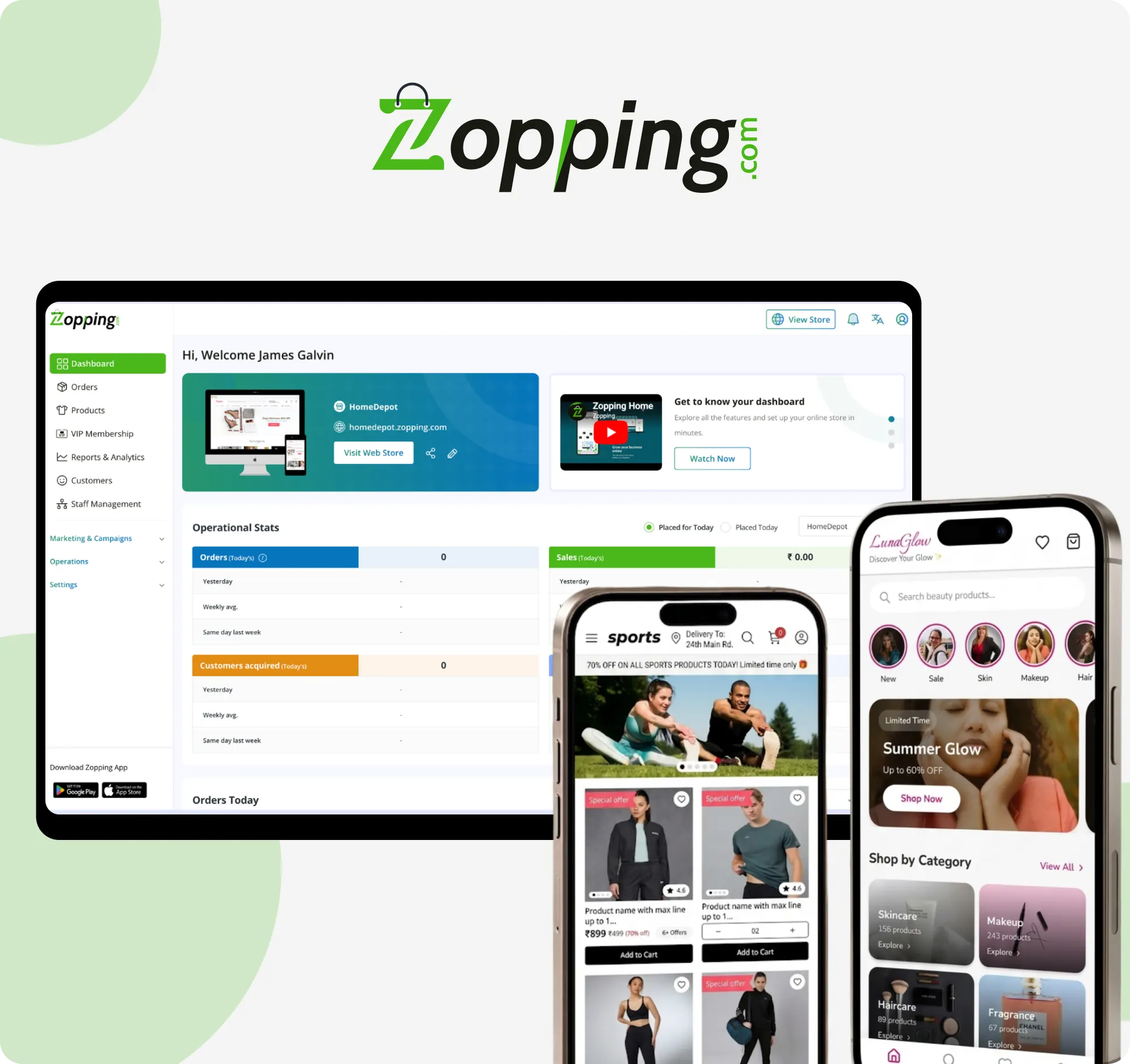
This is where platforms like Zopping make a noticeable difference. Instead of dealing with multiple tools or developers, you can set up a clean, ready-to-use storefront in a much shorter time. The setup feels straightforward, even if you are doing it for the first time.
Step 3: Set Up Fulfillment and Delivery
Decide how you will handle orders once they are placed.
You can manage shipping yourself or partner with logistics providers. Set clear delivery timelines and make sure customers can track their orders.
Also think about packaging. It does not have to be expensive, but it should feel thoughtful and consistent with your brand.
With Zopping, order tracking and management can be handled from a single dashboard, which makes operations less scattered as your order volume grows.
Step 4: Create Product Pages
Your product page is where most buying decisions happen.
Use clear images from different angles. Write descriptions that explain what the product does, who it is for, and why it is useful.
Avoid overcomplicated language. Keep it simple and honest. Add details like size, material, usage, and care instructions.
Customer reviews, even a few, can make a big difference in building trust.
You can also structure your product pages better using tools available on Zopping, which help you organise content, pricing, and variants without needing extra plugins.
Step 5: Drive Traffic to Your Store
Once your store is live, you need people to visit it.
You can use social media, paid ads, influencer collaborations, or content marketing. Platforms like Instagram and Google Ads are commonly used for this.
Start small. Test what works. Gradually increase your spending on channels that bring results.
Many sellers also use built-in marketing tools from Zopping to track campaigns and understand where their traffic is coming from, which saves time switching between tools.
Step 6: Focus on Customer Retention
Getting a customer once is good. Getting them to come back is better.
You can use email campaigns, WhatsApp updates, or loyalty programs to stay connected. Offer small incentives for repeat purchases.
A good post-purchase experience often matters more than the first sale.
With Zopping, you can manage customer data and engagement in one place, making it easier to run follow-ups and retention campaigns without extra effort.
Step 7: Analyze and Scale Your Business
Track what is working and what is not.
Look at metrics like conversion rate, average order value, and repeat purchase rate. Use these insights to improve your store and marketing efforts.
As your business grows, you can expand your product range, explore new markets, and invest more in branding.
A platform like Zopping supports this growth without forcing you to rebuild your store from scratch, which is something many businesses struggle with as they scale.
How Zopping Helps You Build and Scale Your D2C Business
If you are serious about building a D2C brand, the platform you choose will shape your experience more than you might expect. Zopping is built specifically to support businesses that want to sell directly to customers without dealing with unnecessary complexity.
Here’s how it supports your D2C journey in a more practical way.
1. Easy Storefront Setup
You can get your store live without relying heavily on developers. The setup process is designed to be simple, which helps you move from idea to launch faster.
2. Built-In Payments and Checkout
Payments, checkout flows, and order confirmations are already integrated. This reduces the usual complications for customers and improves the overall buying experience.
3. Order and Inventory Management
You can manage orders, track inventory, and monitor stock levels from one place. This becomes especially useful as your business starts handling more volume.
4. Marketing and Analytics Tools
Instead of using multiple tools, you can track performance, understand customer behaviour, and run campaigns within the same ecosystem.
5. Scalable Infrastructure
As your traffic and orders grow, the platform supports that scale without constant technical changes. This allows you to focus more on your business and less on backend issues.
Book a Demo Now
Closing Thoughts
Building a D2C brand in India is no longer limited to large companies. With the right approach, even small teams can create strong, customer-focused brands.
The process may feel overwhelming in the beginning, but once you break it down into steps, it becomes manageable. Focus on your product, understand your audience, and keep improving based on feedback.
Over time, your storefront becomes more than just a place to sell. It becomes your brand’s identity.
FAQs
What is a D2C brand and how does it work?
A D2C brand sells products directly to customers through its own channels like websites or apps, without relying on third-party marketplaces or retailers.
How do I build a D2C storefront in India?
You start by choosing a niche, building an online store, setting up delivery, creating product pages, and driving traffic through marketing channels.
What are the benefits of selling directly to customers?
You get better margins, full control over branding, access to customer data, and the ability to build long-term relationships.
How much does it cost to start a D2C eCommerce business in India?
Costs can vary depending on your product, platform, and marketing spend. You can start small and scale gradually as you grow.
Which platform is best for building a D2C website?
Platforms like Zopping are built to handle storefront setup, payments, operations, and growth in one place, making them a practical choice for D2C brands in India.