
Quick Links
ToggleWith customers shopping online every day and social media driving fashion trends, many aspiring fashion business owners are searching for ways to build a successful brand from home without heavy investment or technical complexity. This guide walks you through how to start a clothing business online step by step, covering everything from planning and setup to marketing and scaling.
Why Does Starting Your Own Clothing Store Online Make Sense Today?
Starting your own business gives you creative freedom, control over pricing, and the ability to build a recognisable identity. Unlike many other businesses, fashion allows you to start small, test demand, and scale gradually. With online selling tools becoming more accessible, it is now easier than ever to turn your ideas into a revenue-generating business.
How to Start an Online Clothing Business from Home: Step-by-Step Guide
Step 1: Define Your Brand & Niche
The first step in starting an online clothing business is deciding what you want to sell and who you want to sell it to. Choosing a focused niche helps you stand out and makes marketing easier.
Here are some popular clothing niches you can explore:
- Women’s daily wear
- Kids’ clothing
- Printed T-shirts
- Sustainable or handmade clothing
A clear niche allows you to design better products and speak directly to your target customers.
Step 2: Research the Market
Market research helps validate your idea before you invest time or money. Study competitors, price ranges, customer reviews, and trending styles on marketplaces and social platforms.
Understanding demand is a crucial part of business, as it prevents overstocking and pricing mistakes. Research also helps you identify gaps where your brand can add value.
Step 3: Choose the Right Business Model
Your business model determines how you source and deliver products. Below are some common business models you can adopt:
- Dropshipping
- Print-on-demand
- Reselling or wholesale
- Own manufacturing or tailoring
Each model has different cost structures and control levels, so choose one that aligns with your budget and goals.
Step 4: Create a Simple Business Plan
As a small business owner, you don’t need to have a complex business plan. Instead, it should clearly outline your products, target audience, pricing strategy, sourcing method, marketing approach, and expected costs.
The idea of having a basic plan when starting an online fashion business is to make it more structured and reduce guesswork during execution.
Step 5: Set Up Your Brand & Legal Basics
This step involves finalising your business name, logo, and visual identity. You should also prepare for basic legal and payment requirements. If you are just starting, registering your business and preparing for GST compliance early can help you avoid issues later as your sales grow.
Step 6: Build Your Online Store
Building your store is where your business becomes visible to customers. Instead of dealing with technical setup, you can use platforms that simplify the process.
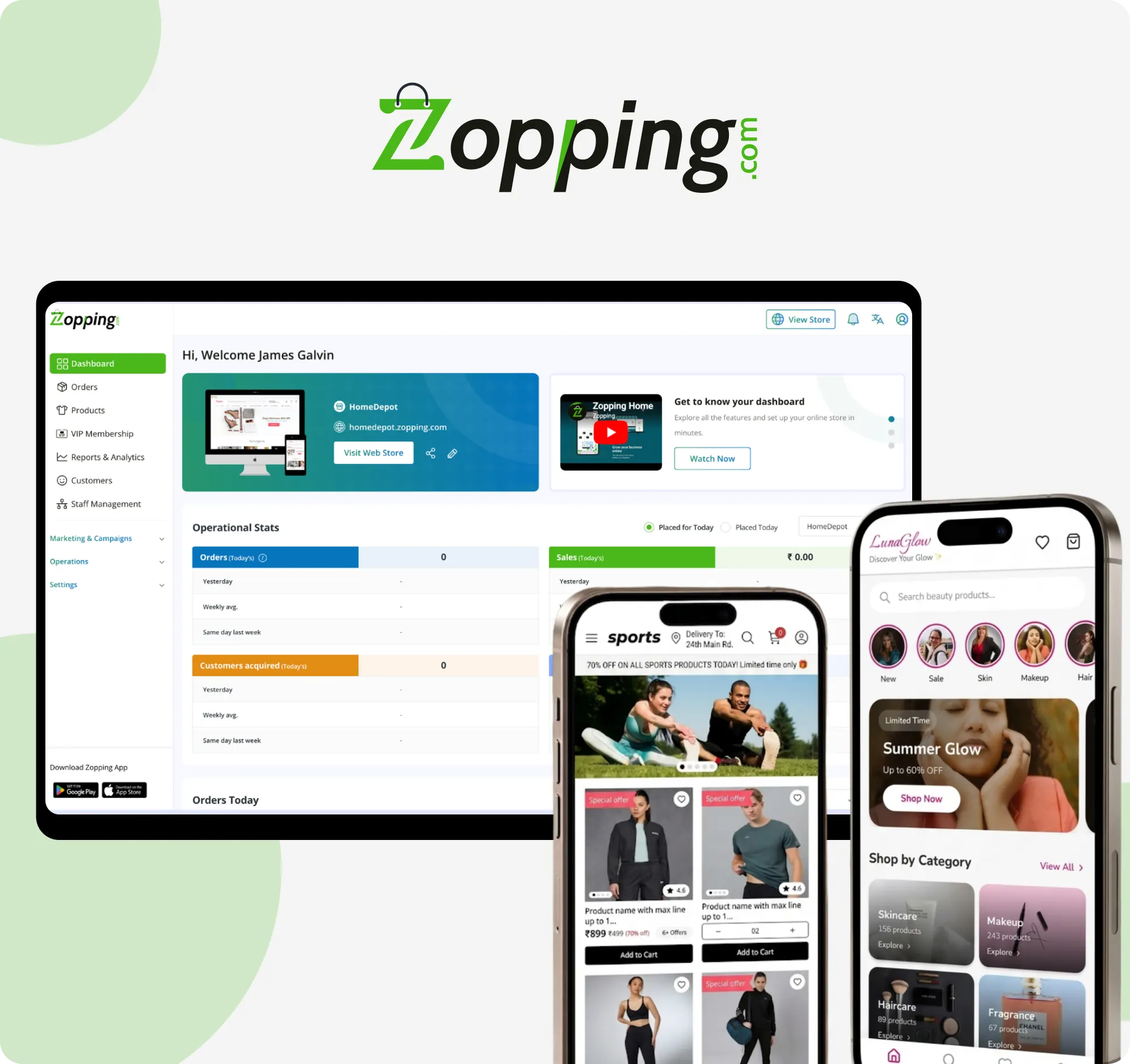
Zopping allows you to create a professional online clothing store without coding. You can design your storefront, manage products, handle orders, and accept payments from a single dashboard. This makes starting an online fashion business significantly easier for beginners.
Step 7: Add Products & Configure Payments
Upload high-quality product images, write clear descriptions, and set competitive prices. Before you launch your small business website, you should also enable payment options and define shipping and return policies. This step is critical as a smooth checkout experience builds trust and improves conversions.
Step 8: Test & Launch Your Store
Before going live, test your website thoroughly. Check the checkout flow, payment processing, mobile experience, and order confirmation. Testing ensures that your store is ready for customers when you officially launch your online clothing business.
Step 9: Market, Optimise, & Scale
Marketing helps customers discover your brand. Organic and paid strategies both play an important role in how to start a clothing business online successfully.
Here are some organic promotion ideas:
- Instagram posts and reels
- WhatsApp sharing
- Word-of-mouth marketing
Some paid marketing ideas include:
- Small-budget ads
- Influencer collaborations
As you grow, track performance and optimise based on customer behaviour.
Common Challenges When Building an Online Fashion Business
| Challenges | Practical Solution |
|---|---|
| Low visibility | Niche focus and consistent social media content |
| Inventory risk | Small batches or print-on-demand |
| Customer trust | Clear visuals, reviews, and transparency |
| High returns | Accurate size guides and descriptions |
| Limited space | Dedicated and organised workspace |
| Small marketing budget | User-generated content and word-of-mouth marketing |
Starting an online clothing business from home offers flexibility and low startup costs, but it also comes with a few practical challenges. The good news is that most of these issues can be managed with the right approach and tools.
-
Visibility in a Crowded Market
Challenge: The online fashion space is highly competitive, which makes it difficult for new brands to attract attention and build visibility.
How to overcome it:
Focus on a clear niche instead of trying to sell to everyone. Build a strong brand identity with consistent visuals and messaging, and collaborate with niche creators or micro-influencers who already speak to your target audience.
-
Managing Inventory Without Losing Money
Challenge: Incorrect demand forecasting can lead to excess stock or frequent stockouts, both of which affect cash flow.
How to overcome it:
Start with limited quantities to test demand. Consider print-on-demand or made-to-order models, and use inventory tracking tools to maintain real-time visibility of stock levels.
-
Limited Space & Resources at Home
Challenge: Running a clothing business from home can quickly take over personal space, leading to disorganisation and inefficiency.
How to overcome it:
Set aside a dedicated work area for storage, packing, and order processing. Use vertical storage solutions and keep workflows simple so daily operations remain manageable.
-
Building Trust as a New Online Brand
Challenge: Customers may hesitate to buy from a new or home-based clothing brand due to a lack of credibility.
How to overcome it:
Use high-quality product images, provide clear size charts and descriptions, and actively collect and showcase customer reviews on social media platforms and your website. Transparency and consistency help build confidence over time.
-
Handling Returns & Delivery Issues
Challenge: Clothing businesses often face higher return rates, mainly due to size and fit concerns, which can impact margins.
How to overcome it:
Share detailed sizing information, write accurate product descriptions, and clearly communicate return policies. Partnering with reliable delivery services also improves the overall customer experience.
-
Marketing Effectively on a Small Budget
Challenge: If you’re just getting started, paid advertising can be expensive and organic reach takes time to build.
How to overcome it:
Focus on consistent social media content, styling tips, and behind-the-scenes posts. Encourage user-generated content and word-of-mouth sharing to grow visibility organically.
Start Your Clothing Business with Zopping!
Learning how to start an online clothing business from home is no longer complicated or expensive. With the right planning, tools, and consistent effort, you can build a profitable clothing brand from your home.
If you’re ready to take that first step, Zopping is here to help you get started! We can help you launch quickly with no-code store setup, integrated payments, inventory management, and delivery support.
FAQs on Starting a Fashion Business Online
Can I start an online clothing business from home with low investment?
Yes, you can start an online clothing business from home with low investment by keeping your initial setup lean. Start with a limited product range, use your home as the fulfilment base, rely on digital marketing instead of physical stores, and choose tools that do not require heavy upfront technology costs.
Which business model is best for beginners in online clothing?
Reselling and print-on-demand models are often best for beginners because they require lower upfront investment and are easier to manage.
Do I need a website to sell clothes online?
While marketplaces and social platforms help, having your own website gives you control over branding, pricing, and customer experience.
How much time does it take to start an online clothing business?
You can set up a basic online clothing store within a few days if your products and branding are ready.
Is business registration or GST required for an online clothing store?
GST registration is required once you cross the applicable threshold or sell through certain marketplaces. Business registration also helps build credibility.