
Quick Links
ToggleIf you have been thinking about entering the food business, meat delivery is one space that is quietly growing fast. Recent estimates suggest that India’s online meat delivery market was valued at around USD 42 million in 2023 and could cross USD 119 million by 2030, growing steadily each year. That alone tells you there is real movement in this space. People are changing how they buy essentials, and meat is no exception.
In this blog, we will take a look at how an online meat delivery business works, why it is gaining traction, and what steps you can follow to build one from scratch
What is a Meat Delivery Business & Why Should You Start?
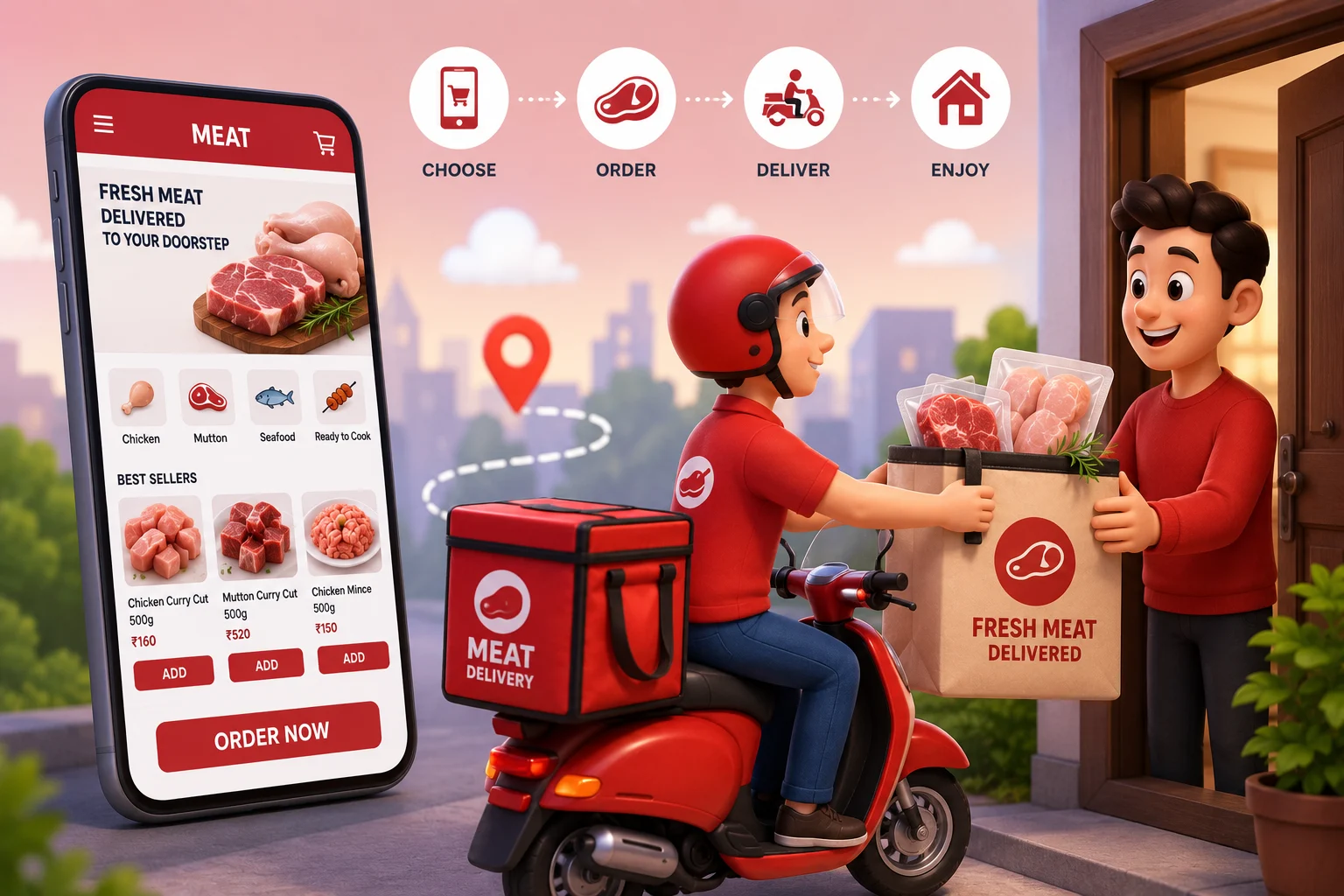
A meat delivery business is a service where customers can order fresh or processed meat online and have it delivered to their doorstep. Instead of visiting a local butcher, they browse products through a website or app, place an order, and receive cleaned, cut, and packaged meat at home.
The entire process is built around convenience. Orders are usually handled through a digital platform, while sourcing, storage, and delivery happen behind the scenes. Businesses either manage their own inventory or partner with suppliers and vendors to fulfil orders.
The focus is not just on selling meat, but on offering a better experience. That includes hygiene, packaging, freshness, and reliable delivery timelines.
Once you understand how it works, the next question is obvious. Why start one?
Here’s why getting into this space makes sense right now.
1. Growing Focus on Hygiene and Safety
After COVID, people have become far more conscious about how their food is handled. Clean packaging, proper storage, and quality checks are no longer optional. Online meat brands that highlight hygiene standards are gaining trust much faster than traditional markets.
2. Changing Buying Habits
A large number of consumers are moving away from wet markets. They prefer the ease of ordering from home, saving time, and avoiding the hassle of physical visits. Doorstep delivery is becoming the default expectation.
3. Room for Higher Margins
You are not limited to raw meat. Many businesses are expanding into ready-to-cook and ready-to-eat options. Marinated chicken, pre-cut portions, and meal kits open up additional revenue streams.
4.Demand for Better Quality and Variety
Customers today are more aware. They look for clean cuts, better sourcing, and even niche options like organic meat or specific cuts. This gives you room to stand out if you focus on quality.
5. Lower Setup Compared to Traditional Stores
With a direct-to-consumer model, you do not always need an expensive retail outlet. A well-built online platform, combined with strong backend operations, can help you start lean and grow gradually.
How to Start an Online Meat Delivery Business in India
Here’s a clear, step-by-step way to approach it.
Step 1: Define Your Niche and Offerings
Start by deciding what exactly you want to sell.
Will you focus only on chicken, or include mutton and seafood as well? Do you want to specialise in premium cuts or everyday essentials? Some businesses also focus on ready-to-cook products instead of raw meat.
Next, think about your audience. Are you targeting families, working professionals, or fitness-focused buyers? Each group has different expectations.
Finally, define what makes you different. It could be faster delivery, better sourcing, unique cuts, or subscription-based supply. This becomes your core positioning.
Step 2: Create a Business Plan
Before you jump in, map things out clearly.
Set your short-term and long-term goals. Decide how much you are willing to invest and what returns you expect.
Plan your operations in detail. Where will you source the meat from? How will you store it? What will your delivery system look like?
It also helps to study existing competitors. Look at what they offer, how they price products, and where they fall short. This gives you a clearer direction.
Step 3: Choose the Right Business Model and Technology
You need to decide how your business will operate.
You can run a single-vendor model where you manage everything yourself, or a multi-vendor setup where different sellers list their products on your platform.
You also need to decide how you will deliver. Hyperlocal delivery works well for faster service, while subscription models can help you build repeat customers.
On the technology side, choose whether you want a website, a mobile app, or both. Your platform should support product listings, secure payments, order tracking, and basic customer management.
Step 4: Register Your Business and Get Licenses
This part is non-negotiable.
You need to register your business legally and obtain the required food licenses. In India, an FSSAI license is essential for any food-related business.
You should also check local regulations related to storage, transport, and hygiene standards. Getting this right from the start avoids problems later.
Step 5: Set Up Suppliers and Operations
Your supply chain will decide your quality.
Work with reliable suppliers who can maintain consistency. Freshness, proper handling, and timely delivery are critical in this business.
You will also need cold storage solutions to maintain product quality. Even small setups should ensure proper temperature control.
Plan your inventory carefully. Overstocking leads to waste, while understocking leads to missed orders.
Step 6: Build, Launch, and Market Your Platform
Once your backend is ready, it is time to go live.
Develop your website or app with a smooth ordering experience. Make sure customers can browse products easily, add items to cart, and complete payments without confusion.
Set up your delivery system so orders are fulfilled on time.
For marketing, start with simple channels. Social media, local ads, and introductory offers can help you attract your first set of customers. Over time, focus on retention through quality and service.
Key Features to Consider for Starting Meat Delivery Business
When building your platform, certain features make a big difference in how customers experience your service.
1. User-Friendly Interface
Customers should be able to navigate your platform without effort. Clear categories and simple layouts help.
2. Detailed Product Listings
Each product should include weight, cut type, pricing, and usage details. This builds confidence while ordering.
3. Real-Time Order Tracking
Customers like knowing where their order is. Tracking updates reduce uncertainty.
4. Multiple Payment Options
Support for UPI, cards, wallets, and COD makes checkout smoother.
5. Secure Login and Profiles
Customers should be able to create accounts, save addresses, and manage orders safely.
6. Ratings and Reviews
Feedback from other buyers helps build trust and improves decision-making.
7. Inventory Management (Backend)
You need a system to track stock levels and avoid order issues.
8. Admin Dashboard
A central dashboard helps you manage orders, customers, and reports in one place.
How Zopping Can Help You Launch Your Online Meat Delivery Business
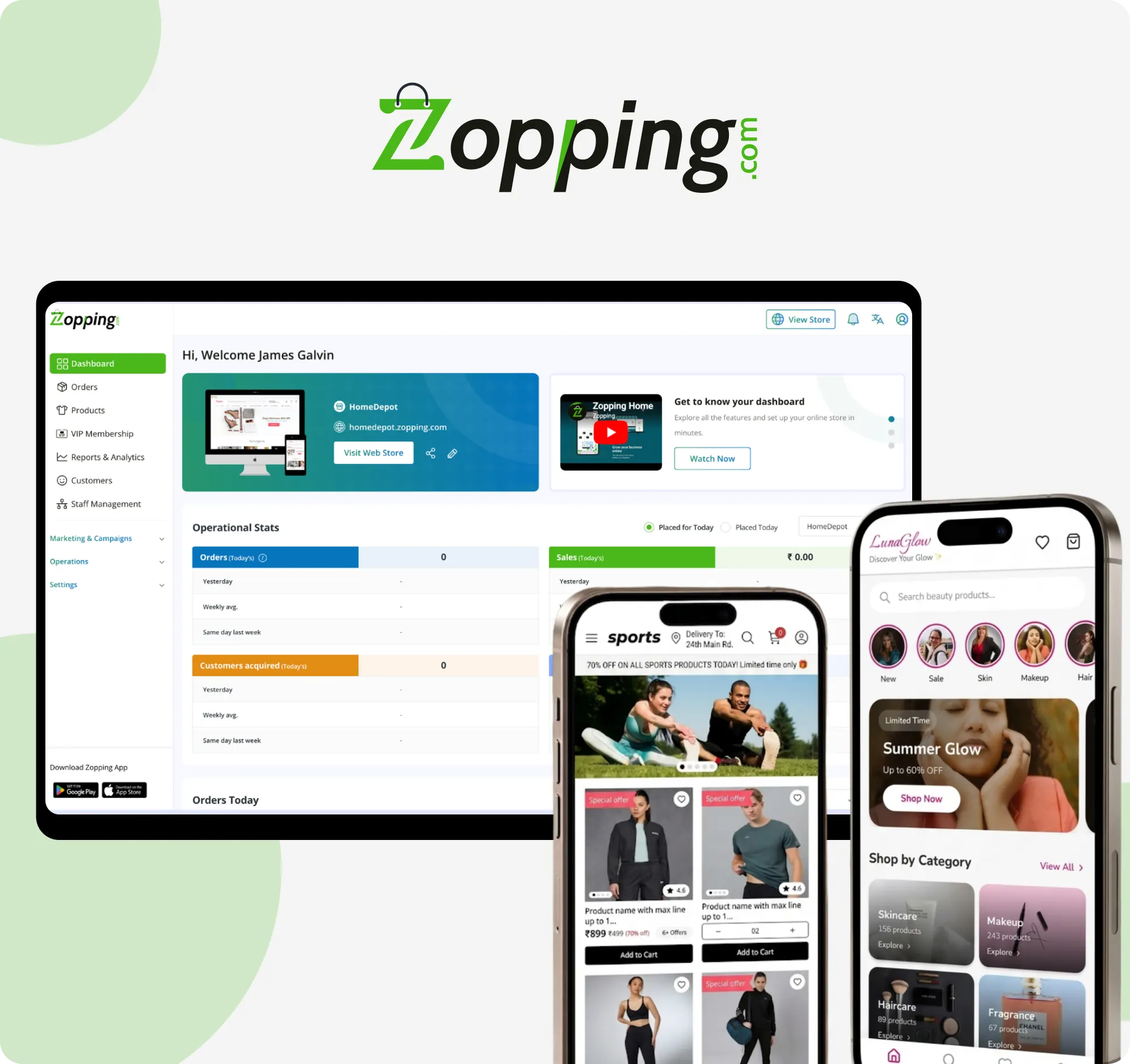
If you are planning to start, one of the biggest challenges is setting up the tech side. Building a platform from scratch takes time and money. That is where Zopping can simplify things.
Here’s how it helps:
1. Build Your Store Without Technical Hassle
You can create your online store quickly without writing a single line of code. The setup is straightforward, and you can start listing products almost immediately.
2. Manage Orders and Inventory in One Place
Zopping gives you a single dashboard to handle orders, track inventory, and monitor daily operations.
3. Enable Smooth Payments and Checkout
Integrated payment systems make it easier for customers to complete purchases without friction.
4. Improve Delivery and Logistics
You can streamline deliveries, manage locations, and ensure orders are fulfilled efficiently.
5. Scale with Built-In Marketing Tools
As your business grows, you can use built-in tools for promotions, offers, and customer engagement.
If you want to explore how it works, you can book a demo and see the platform in action.
Ready to Go Digital? Start Selling Online with Zopping!
Closing Thoughts
Starting an online meat delivery business is not just about selling products. It is about building trust around quality, hygiene, and reliability.
The demand is clearly rising, and customers are open to trying new brands that deliver a better experience. If you approach it with the right planning, strong sourcing, and a smooth digital setup, there is enough room to grow in this space.
Take it step by step. Focus on getting the basics right. The rest builds over time.
FAQs
Is an online meat delivery business profitable in India?
Yes, it can be profitable if managed well. Demand is increasing, and customers are willing to pay for convenience and quality. Profitability depends on sourcing, pricing, and operational efficiency.
What licenses are required to start a meat delivery business in India?
You will need an FSSAI license. Depending on your setup, you may also require local trade licenses and compliance with food safety regulations.
How much investment is needed to start an online meat delivery business?
It depends on your scale. A small setup with limited inventory and a basic platform can start with a moderate investment. Larger operations with cold storage and logistics will require more capital.
Which business model is best for beginners in the meat delivery business?
A single-vendor, hyperlocal model is usually easier to manage in the beginning. It allows better control over quality and operations before expanding further.