

Quick Links
ToggleLooking for Shopify alternatives in 2026? You’re not alone. While Shopify is a popular choice for building online stores, it’s not the perfect fit for everyone. Maybe the pricing feels a bit high, or you want more control over your store’s features and design. Whatever the reason, there are plenty of other platforms out there that can give you the tools you need to run a successful online business. In this guide, we’ll walk you through 15 of the best Shopify alternatives available this year so you can find the one that matches your goals and budget.
15 Best Shopify Alternatives To Consider in 2026
Here are some great Shopify alternatives that can meet your needs without burning a hole in your pocket.
| Platform | Ease of Setup | Ease of Use | Starting Price | Payment & GST | Best For | G2 Rating |
|---|---|---|---|---|---|---|
| Zopping | Very Easy | Very Easy | ₹2,917 (~$35) | Yes | Indian D2C brands, Small to mid-sized businesses | – |
| WooCommerce | Easy | Easy | Free | Yes | WordPress-based stores | 4.4 |
| Magento | Complex | Moderate | Free | Yes | Large enterprises | 4.1 |
| PrestaShop | Moderate | Moderate | Free | Yes | Small businesses | 4.3 |
| OpenCart | Easy | Easy | Free | Yes | Budget/self-hosted stores | 4.3 |
| Ecwid | Very Easy | Very Easy | ₹450 ($15) | Yes | Small sellers | 4.7 |
| BigCommerce | Easy | Very Easy | ₹3,200 ($39) | Yes | Midsize to large stores | 4.2 |
| Squarespace | Easy | Very Easy | ₹1,300 ($16) | Yes | Design-oriented stores | 4.4 |
| Square Online | Very Easy | Very Easy | ₹1,000 ($12) | No | Beginners | 4.2 |
| Wix | Very Easy | Very Easy | ₹1,400 ($17) | No | Creative sites | 4.2 |
| Sellfly | Easy | Easy | ₹2,400 ($29) | No | Digital goods | 3.9 |
| Dukaan | Very Easy | Very Easy | ₹699 ($9) | Yes | Micro-entrepreneurs | 4.3 |
| Shopmatic | Easy | Easy | ₹1,370 ($20) | Yes | Small businesses | 4.0 |
| Zepo | Moderate | Moderate | ₹15,000 ($180) | Yes | Indian brands | 4.5 |
| Kartify | Easy | Easy | ₹4,999 ($60) | Yes | Midsize & enterprise brands | – |
1. Zopping
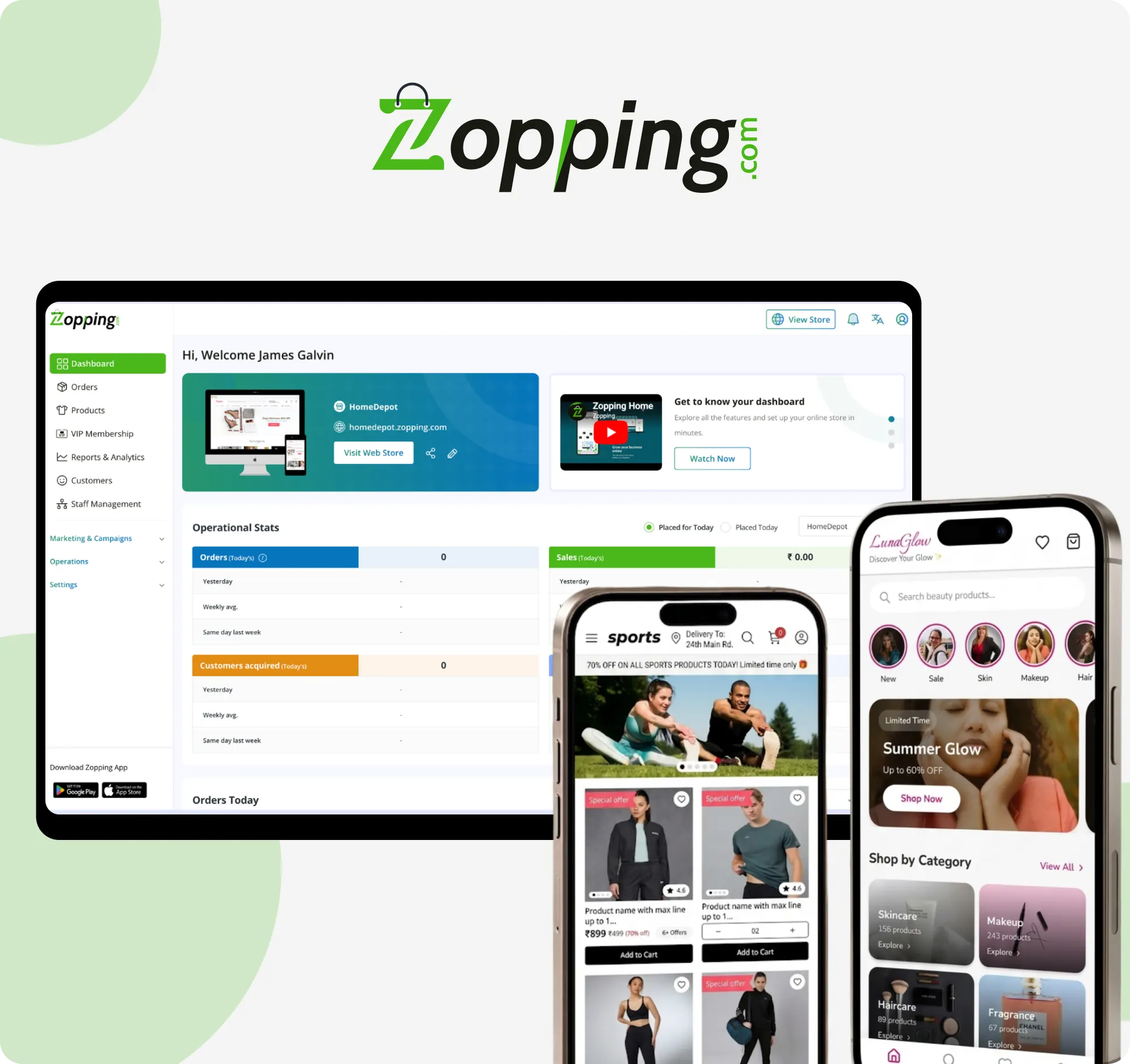
If you want an ecommerce platform that’s simple to use, powerful under the hood, and built for Indian businesses, Zopping Store builder should be your first stop. It’s an all-in-one solution that helps you build your online store without needing a single line of code.
Zopping is designed to work smoothly across industries like fashion, groceries, restaurants, and local retail. You get mobile-friendly templates, secure payment integration, inventory tracking, delivery management, and even built-in marketing tools all in one place.
What really sets Zopping apart is how beginner-friendly it is. Even if you’ve never built a website before, you can set up a beautiful, fully functional online store in just a few hours. Everything is customizable, and the platform is regularly updated with features that reflect how Indian customers shop.
Whether you’re starting small or looking to scale fast, Zopping gives you the tools to grow your business without relying on third-party plugins or developers. It’s local, it’s affordable, and it’s packed with everything you need to succeed online.
| Platform | Zopping | Shopify |
|---|---|---|
| Pricing (₹/mo) | Starts ₹1,999 | Starts ₹1,994 (Basic plan) |
| Ease of Use | Very easy to set up, even without tech skills | Very easy to use; ideal for non-tech users |
| Customization Options | You get pre-designed layouts with limited control over code | Custom themes, drag-and-drop builder, plus code access via Liquid |
| Scalability | Suitable for small to mid-size Indian D2C brands | Scales from small shops to large D2C brands |
| SEO & Marketing Tools | Has built-in SEO features like sitemaps, meta editing | Strong SEO tools; built-in blog, meta editing, marketing apps |
| Payment Integration (India) | Works well with Razorpay, Paytm, UPI, GST built-in | Supports Razorpay, PayU, Cashfree, CCAvenue; GST invoices via apps |
| Product Management | Easy to manage products, variants, and categories | Excellent dashboard; handles SKUs, inventory, shipping, variants |
| Hosting & Security | Secure hosting within India | Fully hosted, PCI-compliant, auto SSL, CDN |
| Support | Chat and email support | 24/7 live chat, email, and phone support |
| India-specific Features | Built for Indian sellers, includes GST billing, fast UPI checkout | Indian payment and GST plugins; integrates with Indian logistics |
India-Specific Considerations:
- Accepts popular Indian payment modes like UPI, wallets, and net banking
- Automatically handles GST and creates invoices that follow IRP rules
- Comes with templates designed for Indian users and supports local languages
Pros:
- Designed specifically for Indian sellers and businesses
- No commission is deducted from your sales
- Offers built-in logistics, cash on delivery, and smooth daily settlements
Cons:
- Limited options when it comes to connecting with third-party apps, but improving
Ideal For:
People who run a small business or a direct-to-customer brand in India and want a single platform that does everything for them and doesn’t need coding knowledge.
Find the Perfect E-commerce Platform for Your Indian Business!
Try Zopping Now2. WooCommerce
If you’re already using WordPress, WooCommerce might be the easiest and most flexible ecommerce option for you. It’s a free plugin that turns any WordPress site into a full-fledged online store. Since it’s open-source, you can customize everything to your liking.
The plugin itself won’t cost you, but keep in mind that you’ll still need to pay for hosting, an SSL certificate, and possibly email services. Also, if you’re not comfortable with HTML or CSS, you might need help from a developer. Adding new features often means installing more plugins, which can make things a bit complicated and may affect your site’s speed. Still, for WordPress users who want total control, WooCommerce is a strong contender.
| Platform | WooCommerce | Shopify |
|---|---|---|
| Pricing (₹/mo) | Free plugin; hosting extra (₹500–₹1,500/mo) | Starts ₹1,994 (Basic plan) |
| Ease of Use | Easy if you’re already using WordPress | Very easy to use; ideal for non-tech users |
| Customization Options | Fully customizable with themes, plugins, and code | Custom themes, drag-and-drop builder, plus code access via Liquid |
| Scalability | Scales well with good hosting and caching setup | Scales from small shops to large D2C brands |
| SEO & Marketing Tools | Excellent with plugins like Yoast SEO and RankMath | Strong SEO tools; built-in blog, meta editing, marketing apps |
| Payment Integration (India) | Supports Razorpay, Paytm, CCAvenue, GST plugins available | Supports Razorpay, PayU, Cashfree, CCAvenue; GST invoices via apps |
| Product Management | Handles bulk products, inventory, and shipping zones | Excellent dashboard; handles SKUs, inventory, shipping, variants |
| Hosting & Security | Depends on your host; manual SSL and backups | Fully hosted, PCI-compliant, auto SSL, CDN |
| Support | Community support, forums, paid devs available | 24/7 live chat, email, and phone support |
| India-specific Features | Full GST and local payment support through plugins | Indian payment and GST plugins; integrates with Indian logistics |
India-Specific Considerations:
- Compatible with Indian payment providers like Razorpay, Paytm, and Instamojo
- Plugins for GST and shipping are available
- Easily links with courier partners in India
Pros:
- No upfront cost and gives you full freedom to customizeg
- Offers a vast plugin library for added features
- Gives you complete ownership of your site and store
Cons:
- You need some basic understanding of WordPress
- Hosting, security, and updates are your responsibility
Ideal For:
Perfect for Indian sellers who are comfortable working with WordPress and want to control everything from design to functionality.
3. Magento / Adobe Commerce
Magento, now known as Adobe Commerce, is built for serious online sellers. It’s ideal if you already have an established store or plan to scale fast. The platform is open-source and gives you a lot of control over how your store looks and functions.
You’ll need to cover costs for hosting, themes, and plugins, but the software itself is free. Magento supports a wide range of products, whether physical, digital, or subscription-based. It also comes with built-in SEO tools, analytics, and support for multiple payment methods. There’s a drag-and-drop website builder, customizable themes, and even cloud hosting options. If you have the resources and a bit of technical help, Magento can take your ecommerce game to the next level.
| Platform | Magento (Adobe Commerce) | Shopify |
|---|---|---|
| Pricing (₹/mo) | Free (self-hosted) or ₹1L+ for hosted version | Starts ₹1,994 (Basic plan) |
| Ease of Use | Requires a developer or agency | Very easy to use; ideal for non-tech users |
| Customization Options | Extremely flexible, but complex to build | Custom themes, drag-and-drop builder, plus code access via Liquid |
| Scalability | Best for large-scale enterprise sites | Scales from small shops to large D2C brands |
| SEO & Marketing Tools | Excellent SEO with full code-level access | Strong SEO tools; built-in blog, meta editing, marketing apps |
| Payment Integration (India) | Custom gateway modules for Razorpay, CCAvenue | Supports Razorpay, PayU, Cashfree, CCAvenue; GST invoices via apps |
| Product Management | High-level catalog management with B2B options | Excellent dashboard; handles SKUs, inventory, shipping, variants |
| Hosting & Security | Requires manual setup or Adobe hosting | Fully hosted, PCI-compliant, auto SSL, CDN |
| Support | Dev-focused community and paid support | 24/7 live chat, email, and phone support |
| India-specific Features | Needs custom GST and shipping logic setup | Indian payment and GST plugins; integrates with Indian logistics |
India-Specific Considerations:
- Easily compatible with Indian payment plugins
- GST features are available through third-party tools
- Can connect with Indian delivery services using APIs
Pros:
- Extremely flexible and designed to grow with your business
- Good option for B2B and complex e-commerce setups
- Backed by a large global developer network
Cons:
- Setup is technical and takes time
- Costs more for development and ongoing maintenance
Ideal For:
A solid fit for large businesses in India that need advanced customization, control, and room to scale.
4. OpenCart
OpenCart is a free, open-source ecommerce platform that helps you build a professional online store without much fuss. Its interface is clean and straightforward, making it a great choice for small to medium-sized businesses.
One of its biggest strengths is its multi-store support, which lets you manage several stores from a single admin panel. It also offers strong SEO tools like custom metadata and sitemap control. Thanks to its modular setup, OpenCart is built to handle high traffic and can scale as your business grows.
| Platform | OpenCart | Shopify |
|---|---|---|
| Pricing (₹/mo) | Free; hosting ₹500–₹1,500/mo | Starts ₹1,994 (Basic plan) |
| Ease of Use | More user-friendly than PrestaShop | Very easy to use; ideal for non-tech users |
| Customization Options | Good range of themes and modules | Custom themes, drag-and-drop builder, plus code access via Liquid |
| Scalability | Can scale but may slow down with large catalogs | Scales from small shops to large D2C brands |
| SEO & Marketing Tools | Basic SEO; extensions available | Strong SEO tools; built-in blog, meta editing, marketing apps |
| Payment Integration (India) | Payment extensions for Indian gateways | Supports Razorpay, PayU, Cashfree, CCAvenue; GST invoices via apps |
| Product Management | Good inventory tools and extensions | Excellent dashboard; handles SKUs, inventory, shipping, variants |
| Hosting & Security | Security depends on your hosting | Fully hosted, PCI-compliant, auto SSL, CDN |
| Support | Community and freelance support | 24/7 live chat, email, and phone support |
| India-specific Features | Indian shipping and tax modules available | Indian payment and GST plugins; integrates with Indian logistics |
India-Specific Considerations:
- Indian payment options can be added through extensions
- GST plugins are available
- Comes with support for local shipping APIs
Pros:
- Free to use and simple to manage
- Works well for small to medium businesses
- Has an active online support community
- Allows you to manage multiple business together
Cons:
- May not be the best choice for large or fast-scaling stores
- Needs additional extensions for more advanced features
Ideal For:
If you’re a small Indian business looking to get online with minimum expenses and want full control of your store, OpenCart is worth considering.
5. PrestaShop
If you’re working with a limited budget, PrestaShop could be a smart option. The software is free, but like others on this list, you’ll still need to invest in hosting and a domain name. It’s not the flashiest when it comes to themes, but it gets the job done.
PrestaShop supports multiple languages and currencies, which is great if you plan to sell internationally. You won’t have to pay transaction fees either. With the help of a skilled developer, you can build a solid and attractive store without breaking the bank. It’s a practical solution if you want good functionality without overspending.
| Platform | PrestaShop | Shopify |
|---|---|---|
| Pricing (₹/mo) | Free; hosting ₹500–₹2,000/mo | Starts ₹1,994 (Basic plan) |
| Ease of Use | Takes time to learn; not drag-and-drop | Very easy to use; ideal for non-tech users |
| Customization Options | Good customization via themes and modules | Custom themes, drag-and-drop builder, plus code access via Liquid |
| Scalability | Suitable for small to mid-level stores | Scales from small shops to large D2C brands |
| SEO & Marketing Tools | Basic SEO tools; you can extend it | Strong SEO tools; built-in blog, meta editing, marketing apps |
| Payment Integration (India) | Modules for Razorpay, PayU, Paytm available | Supports Razorpay, PayU, Cashfree, CCAvenue; GST invoices via apps |
| Product Management | You can manage products, combinations, discounts | Excellent dashboard; handles SKUs, inventory, shipping, variants |
| Hosting & Security | Hosting is your responsibility; SSL setup needed | Fully hosted, PCI-compliant, auto SSL, CDN |
| Support | Forums, module devs, agencies | 24/7 live chat, email, and phone support |
| India-specific Features | GST modules available; supports Indian logistics plugins | Indian payment and GST plugins; integrates with Indian logistics |
India-Specific Considerations:
- Payment gateways for India can be added using modules
- GST features are supported
- Works with Indian courier APIs
Pros:
- Free and open-source
- Comes with a lot of features without needing too many add-ons
- Design and layout can be customized as per your needs
Cons:
- You’ll need hosting and someone who can handle the technical setup
- Doesn’t have a wide range of official plugins built for Indian users
Ideal For:
Great for Indian startups that want an affordable, customizable platform and have some technical resources on hand.
6. BigCommerce
BigCommerce is great if you’re looking for an ecommerce platform that’s easy to use and doesn’t require too much technical knowledge. Its drag-and-drop editor makes setting up a website straightforward, even for beginners.
You get a variety of professional themes, although most of the free ones are limited. The good news is, you won’t pay any transaction fees, no matter which payment provider you use. BigCommerce comes with powerful built-in tools like advanced SEO features and multi-currency support. However, some users notice that it can be a bit slower than other platforms when it comes to load time. Still, for ease of use and built-in features, it’s a strong Shopify alternative.
| Platform | BigCommerce | Shopify |
|---|---|---|
| Pricing (₹/mo) | Starts ₹3,200 | Starts ₹1,994 (Basic plan) |
| Ease of Use | Simple dashboard; beginner-friendly | Very easy to use; ideal for non-tech users |
| Customization Options | Good themes; allows deeper customization with dev help | Custom themes, drag-and-drop builder, plus code access via Liquid |
| Scalability | Can handle large product catalogs and traffic | Scales from small shops to large D2C brands |
| SEO & Marketing Tools | Offers advanced SEO; supports AMP | Strong SEO tools; built-in blog, meta editing, marketing apps |
| Payment Integration (India) | Supports Razorpay, CCAvenue; GST-friendly setup | Supports Razorpay, PayU, Cashfree, CCAvenue; GST invoices via apps |
| Product Management | Handles SKUs, bulk pricing, categories, filtering | Excellent dashboard; handles SKUs, inventory, shipping, variants |
| Hosting & Security | Cloud-hosted, PCI compliant, auto-SSL | Fully hosted, PCI-compliant, auto SSL, CDN |
| Support | 24/7 email, phone, and chat support | 24/7 live chat, email, and phone support |
| India-specific Features | Supports Indian tax structure and shipping tools | Indian payment and GST plugins; integrates with Indian logistics |
India-Specific Considerations:
- Works with Indian payment gateways like PayU and Razorpay
- GST handling possible through third-party tools
- Shipping integration available for Indian logistic services.
Pros:
- Hosted platform, so no need to manage technical maintenance
- Reliable performance even for large product catalogs
- SEO and speed features are already built in
Cons:
- Monthly subscription cost is higher than open-source platforms
- Fewer India-specific tools compared to local platforms
Ideal For:
Best suited for growing Indian businesses that want a stable, low-maintenance platform that can handle scale without much tech involvement.
7. Ecwid
Ecwid is perfect if you already have a website or social media presence and want to start selling quickly. It integrates easily with platforms like WordPress, Wix, Facebook, Instagram, and even WhatsApp.
You can set up your store without building a full site from scratch. Ecwid supports digital product sales, offers multiple payment gateways, and has built-in POS tools. You can even automate parts of your marketing and offer discounts. If you want to sell across different platforms without a lot of technical hassle, Ecwid is a great pick.
| Platform | Ecwid | Shopify |
|---|---|---|
| Pricing (₹/mo) | Free basic plan; ₹450–₹1,400 for full features | Starts ₹1,994 (Basic plan) |
| Ease of Use | Extremely simple; can be added to any site | Very easy to use; ideal for non-tech users |
| Customization Options | Limited design control; more of a plug-in tool | Custom themes, drag-and-drop builder, plus code access via Liquid |
| Scalability | Not built for high-traffic stores | Scales from small shops to large D2C brands |
| SEO & Marketing Tools | Basic SEO; control meta, sitemap, titles | Strong SEO tools; built-in blog, meta editing, marketing apps |
| Payment Integration (India) | Razorpay, PayU integration via third-party apps | Supports Razorpay, PayU, Cashfree, CCAvenue; GST invoices via apps |
| Product Management | Manages digital and physical products easily | Excellent dashboard; handles SKUs, inventory, shipping, variants |
| Hosting & Security | Fully hosted and secure | Fully hosted, PCI-compliant, auto SSL, CDN |
| Support | Support depends on plan; email and chat | 24/7 live chat, email, and phone support |
| India-specific Features | Not built for Indian sellers but works with plugins | Indian payment and GST plugins; integrates with Indian logistics |
India-Specific Considerations:
- Allows payments through Razorpay and PayU
- Lets you sell directly via WhatsApp and other social platforms
- Doesn’t focus much on GST or Indian shipping features
Pros:
- Can be added to an existing website easily
- Has a free plan for basic use
- Quick and easy to get started
Cons:
- Limited control over your store’s backend
- Fewer features aimed specifically at Indian sellers
Ideal For:
Good choice for influencers, content creators, and small sellers in India who want to add e-commerce features without setting up a full website.
8. Squarespace
Squarespace is ideal for creatives and professionals who care about design. If your focus is more on showcasing content and visuals, this platform gives you beautiful templates and easy tools to build a visually striking site.
You can still run an online store with Squarespace, but it may not offer the same depth of ecommerce features that Shopify does. Shopify handles things like payments, shipping, and third-party apps more robustly. However, Squarespace usually costs less and is simpler to manage. So if your priority is content and presentation rather than advanced ecommerce functions, Squarespace can be a smart, budget-friendly choice.
| Platform | Squarespace | Shopify |
|---|---|---|
| Pricing (₹/mo) | Starts ₹1,300 | Starts ₹1,994 (Basic plan) |
| Ease of Use | Very clean and intuitive | Very easy to use; ideal for non-tech users |
| Customization Options | Drag-and-drop only; limited product layout changes | Custom themes, drag-and-drop builder, plus code access via Liquid |
| Scalability | Not ideal for high-volume stores | Scales from small shops to large D2C brands |
| SEO & Marketing Tools | Good for blogging SEO, weak on e-commerce SEO | Strong SEO tools; built-in blog, meta editing, marketing apps |
| Payment Integration (India) | No native Indian payment gateway | Supports Razorpay, PayU, Cashfree, CCAvenue; GST invoices via apps |
| Product Management | Good for showcasing products visually | Excellent dashboard; handles SKUs, inventory, shipping, variants |
| Hosting & Security | Secure hosting, SSL included | Fully hosted, PCI-compliant, auto SSL, CDN |
| Support | Email and live chat | 24/7 live chat, email, and phone support |
| India-specific Features | No Indian payment or tax tools | Indian payment and GST plugins; integrates with Indian logistics |
India-Specific Considerations:
- Supports INR payments through Stripe and Razorpay integrations
- Lacks in-built GST and Indian courier tools
Pros:
- Visually impressive templates and themes
- Comes with built-in hosting and tools, no separate setup needed
- Simple drag-and-drop editor for beginners
Cons:
- Limited when it comes to large e-commerce stores
- Fewer features compared to platforms focused only on selling
Ideal For:
Ideal for Indian creators, service providers, or boutique brands who want a professional-looking website without too much hassle.
9. Weebly
Weebly is a solid option if you’re just starting out and want something free or low-cost. It’s easy to use and works well for building a basic online store. The platform doesn’t have as many features as Shopify, but it’s much cheaper. Even the most expensive Weebly plan costs less than Shopify’s basic one.
Weebly’s drag-and-drop builder is easy to use, making it great for small businesses or individuals who just want to set up a clean, functional website without getting into the technical stuff. But if you’re aiming to scale up in a big way, you might find Weebly a bit limiting down the road.
| Platform | Weebly (by Square) | Shopify |
|---|---|---|
| Pricing (₹/mo) | ₹1,000+ | Starts ₹1,994 (Basic plan) |
| Ease of Use | Very easy, entry-level | Very easy to use; ideal for non-tech users |
| Customization Options | Minimal themes; limited control | Custom themes, drag-and-drop builder, plus code access via Liquid |
| Scalability | Meant for small shops | Scales from small shops to large D2C brands |
| SEO & Marketing Tools | Basic SEO only | Strong SEO tools; built-in blog, meta editing, marketing apps |
| Payment Integration (India) | Indian gateways not supported | Supports Razorpay, PayU, Cashfree, CCAvenue; GST invoices via apps |
| Product Management | Handles a basic product catalog | Excellent dashboard; handles SKUs, inventory, shipping, variants |
| Hosting & Security | Hosted and secure | Fully hosted, PCI-compliant, auto SSL, CDN |
| Support | Email and forums only | 24/7 live chat, email, and phone support |
| India-specific Features | No GST or Indian integration | Indian payment and GST plugins; integrates with Indian logistics |
India-Specific Considerations:
- INR payments can be supported using third-party tools
- No native GST or shipping support for India
Pros:
- Super simple drag-and-drop builder
- Free plan lets you test it out
- Doesn’t require much maintenance once ready
Cons:
- Basic feature set compared to modern platforms
- Updates and innovations are slower
Ideal For:
Great for individuals or small sellers in India who want to experiment with online selling or run a small-scale e-commerce setup.
10. Wix Studio
Wix Studio is designed for users who want more control over design and development. It comes with over 350 responsive templates and lets you create advanced eCommerce sites. You can build custom components, use a built-in cloud-based IDE, or even speed things up using Wix Studio AI.
There’s also a chance to earn from your creations. If you build interactive widgets, you can sell them on the Wix App Market, which reaches over 245 million users. It’s a good fit for developers, agencies, or anyone who wants a more flexible and scalable platform.
| Platform | Wix | Shopify |
|---|---|---|
| Pricing (₹/mo) | ₹1,400 for Business plans | Starts ₹1,994 (Basic plan) |
| Ease of Use | Drag-and-drop; very visual | Very easy to use; ideal for non-tech users |
| Customization Options | Lots of template options and plugins | Custom themes, drag-and-drop builder, plus code access via Liquid |
| Scalability | Can grow to medium-sized stores | Scales from small shops to large D2C brands |
| SEO & Marketing Tools | Built-in SEO manager, good tools | Strong SEO tools; built-in blog, meta editing, marketing apps |
| Payment Integration (India) | Razorpay, PayU through plugins | Supports Razorpay, PayU, Cashfree, CCAvenue; GST invoices via apps |
| Product Management | Clean dashboard for inventory, shipping | Excellent dashboard; handles SKUs, inventory, shipping, variants |
| Hosting & Security | Fully hosted with backups and SSL | Fully hosted, PCI-compliant, auto SSL, CDN |
| Support | Support via email and chat | 24/7 live chat, email, and phone support |
| India-specific Features | Some plugins available for India | Indian payment and GST plugins; integrates with Indian logistics |
India-Specific Considerations:
- Works with Razorpay, PayU, and Instamojo
- GST setup can be added using apps
- Offers mobile-ready and regional language-friendly templates
Pros:
- Lots of creative freedom with design
- Huge library of ready-made templates
- Easy payment gateway setup for India
Cons:
- Heavier websites may perform slowly
- SEO requires more manual tuning
Ideal For:
Perfect if you’re a creative entrepreneur or agency in India looking to build a stylish site with flexibility and ease of use.
11. Sellfy
Sellfy is perfect if you’re a creator or small business owner who just wants to start selling without dealing with complex setups.Whether it’s digital products, physical goods, subscriptions, or print-on-demand items, Sellfy covers it all.
You get six pre-designed templates and a drag-and-drop builder that’s easy to work with. Sellfy also includes built-in SEO tools, secure hosting, and the ability to connect your own domain. If you want something clean, fast, and simple, Sellfy is a great pick.
| Platform | Selfy | Shopify |
|---|---|---|
| Pricing (₹/mo) | ₹2,400+ | Starts ₹1,994 (Basic plan) |
| Ease of Use | Very easy; no setup needed | Very easy to use; ideal for non-tech users |
| Customization Options | Templates are fixed; branding options limited | Custom themes, drag-and-drop builder, plus code access via Liquid |
| Scalability | Not for physical products or large stores | Scales from small shops to large D2C brands |
| SEO & Marketing Tools | Minimal SEO support | Strong SEO tools; built-in blog, meta editing, marketing apps |
| Payment Integration (India) | Stripe and PayPal only; no Indian gateways | Supports Razorpay, PayU, Cashfree, CCAvenue; GST invoices via apps |
| Product Management | Made for digital product sales | Excellent dashboard; handles SKUs, inventory, shipping, variants |
| Hosting & Security | Hosted and secured | Fully hosted, PCI-compliant, auto SSL, CDN |
| Support | Email support only | 24/7 live chat, email, and phone support |
| India-specific Features | No Indian payment support | Indian payment and GST plugins; integrates with Indian logistics |
India-Specific Considerations:
- Sellfy can support INR, but only if your payment gateway handles it properly.
- It’s not designed around Indian tax laws, so you might need to do some manual work for GST and invoicing.
Pros:
- Great for digital creators like artists, musicians, and educators
- Simple to set up and has a clean interface
- Comes with built-in marketing tools to promote your work
Cons:
- Customization options for your storefront are limited
- Doesn’t offer much help when it comes to Indian-specific needs
Ideal For:
Indian content creators who want to sell digital products like music, ebooks, or online courses
12. Dukaan
If you want a fast and easy way to launch your eCommerce store, Dukaan might be your go-to option. It’s a SaaS platform made for B2C and D2C businesses that want power and simplicity in one place.
You don’t need to know a single line of code. The dashboard is packed with features like order management, payments, and store customization. The themes are fast, mobile-friendly, and completely free. If you have a bit of technical knowledge, you can even add custom CSS.
Dukaan is built to grow with your business. Whether you’re just starting out or ready to scale, the platform keeps things smooth and efficient.
| Platform | Dukaan | Shopify |
|---|---|---|
| Pricing (₹/mo) | Free plan; ₹699/month for advanced | Starts ₹1,994 (Basic plan) |
| Ease of Use | Simplest to use; made for mobile-first sellers | Very easy to use; ideal for non-tech users |
| Customization Options | Templates only; no deep customization | Custom themes, drag-and-drop builder, plus code access via Liquid |
| Scalability | Best for micro-businesses | Scales from small shops to large D2C brands |
| SEO & Marketing Tools | Basic SEO and coupon tools | Strong SEO tools; built-in blog, meta editing, marketing apps |
| Payment Integration (India) | Razorpay, UPI, Paytm, GST built-in | Supports Razorpay, PayU, Cashfree, CCAvenue; GST invoices via apps |
| Product Management | Super basic product upload and order view | Excellent dashboard; handles SKUs, inventory, shipping, variants |
| Hosting & Security | Hosted and secured | Fully hosted, PCI-compliant, auto SSL, CDN |
| Support | Email and live chat (limited) | 24/7 live chat, email, and phone support |
| India-specific Features | Entire platform built for Indian use | Indian payment and GST plugins; integrates with Indian logistics |
India-Specific Considerations:
- Dukaan is built with Indian sellers in mind.
- It supports UPI, Paytm, Razorpay, and helps with GST billing and invoice generation.
- You also get access to local delivery partners.
Pros:
- India-first features make it super convenient
- Quick to launch your store with minimal setup
Cons:
- Not the best choice if you’re targeting customers outside India
- Store design and customization features are limited
Ideal For:
Indian resellers, small shop owners, and local businesses moving online
13. Shopmatic
Shopmatic is built to make online selling easier for small businesses. It gives you tools to create your store, manage products, handle orders, and accept payments from one dashboard.
What makes Shopmatic different is its strong focus on social selling. You can sell directly through WhatsApp, Messenger, and Telegram. The platform also connects to major marketplaces like Amazon, Lazada, and Shopee. It includes data tools as well, so you can track what’s selling and who’s buying. For anyone juggling multiple sales channels, Shopmatic keeps everything in one place.
| Platform | Shopmatic | Shopify |
|---|---|---|
| Pricing (₹/mo) | ₹1,370+ | Starts ₹1,994 (Basic plan) |
| Ease of Use | Step-by-step guided setup | Very easy to use; ideal for non-tech users |
| Customization Options | Themes with small custom options | Custom themes, drag-and-drop builder, plus code access via Liquid |
| Scalability | Scales to small-mid businesses | Scales from small shops to large D2C brands |
| SEO & Marketing Tools | Decent SEO and email tools | Strong SEO tools; built-in blog, meta editing, marketing apps |
| Payment Integration (India) | Indian gateway and GST enabled | Supports Razorpay, PayU, Cashfree, CCAvenue; GST invoices via apps |
| Product Management | Manages inventory, variants, discounting | Excellent dashboard; handles SKUs, inventory, shipping, variants |
| Hosting & Security | Fully hosted; secure | Fully hosted, PCI-compliant, auto SSL, CDN |
| Support | Email and chatbot support | 24/7 live chat, email, and phone support |
| India-specific Features | Supports Indian logistics and taxes | Indian payment and GST plugins; integrates with Indian logistics |
India-Specific Considerations:
- Offers GST invoicing
- Accepts local payments from UPI and digital wallets
- Ties in with courier services for local deliveries
Pros:
- Easy onboarding with guided support
- Features designed for Indian users
- Budget-friendly plans for small sellers
Cons:
- Limited options for scaling up
- Store design is template-based
Ideal For:
Indian home-based sellers, solopreneurs, and boutique shops
14. Zepo Commerce
Zepo Commerce is another India-based eCommerce platform that offers a full toolkit for small to medium-sized businesses. It allows you to set up an online store quickly, and includes features like logistics integration, payment gateways, and marketing tools.
Zepo makes selling easy by automating many of the day-to-day tasks like shipping and payments. It also supports sales through WhatsApp and other social platforms, helping you reach more customers with less effort. If you’re looking for an affordable solution that works well in the Indian market, Zepo is a solid option.
| Platform | Zepo | Shopify |
|---|---|---|
| Pricing (₹/mo) | Approx. ₹15,000/year | Starts ₹1,994 (Basic plan) |
| Ease of Use | Moderate to set up | Very easy to use; ideal for non-tech users |
| Customization Options | Older template system | Custom themes, drag-and-drop builder, plus code access via Liquid |
| Scalability | Mid-level scaling | Scales from small shops to large D2C brands |
| SEO & Marketing Tools | Very basic SEO tools | Strong SEO tools; built-in blog, meta editing, marketing apps |
| Payment Integration (India) | Indian gateways supported | Supports Razorpay, PayU, Cashfree, CCAvenue; GST invoices via apps |
| Product Management | Works for physical product catalogs | Excellent dashboard; handles SKUs, inventory, shipping, variants |
| Hosting & Security | Hosted and SSL-enabled | Fully hosted, PCI-compliant, auto SSL, CDN |
| Support | Limited support now (may be winding down) | 24/7 live chat, email, and phone support |
| India-specific Features | Has Indian integrations | Indian payment and GST plugins; integrates with Indian logistics |
India-Specific Considerations:
- GST and Indian payment options are built in
- Supports cash on delivery and logistics integration
- Focused fully on the Indian e-commerce market
Pros:
- Complete e-commerce toolkit tailored for India
- Helps simplify daily operations
- Templates are localized for Indian buyers
Cons:
- Store design flexibility is limited
- Feature updates can be slow
Ideal For:
Indian offline stores looking to start selling online
15. Kartify
GoKartify gives you the tools to build and grow your online store without needing technical skills. You can design your storefront using simple, customizable features that focus on creating a smooth shopping experience.
Their platform is optimized to reduce cart abandonment and improve checkout speeds. Notifications through SMS, Email, or WhatsApp keep your customers in the loop. Kartify also helps you boost retention by delivering a clean, fast, and user-friendly interface that customers enjoy using.
It’s a good pick if you’re looking for a flexible platform that focuses on user experience and conversion.
| Platform | Kartify | Shopify |
|---|---|---|
| Pricing (₹/mo) | ₹4,999/month | Starts ₹1,994 (Basic plan) |
| Ease of Use | Built for Indian brands; solid backend | Very easy to use; ideal for non-tech users |
| Customization Options | Custom workflows and deep integration | Custom themes, drag-and-drop builder, plus code access via Liquid |
| Scalability | Scales well for serious D2C brands | Scales from small shops to large D2C brands |
| SEO & Marketing Tools | SEO-friendly, integrated campaigns and CRM | Strong SEO tools; built-in blog, meta editing, marketing apps |
| Payment Integration (India) | Full Indian payment and GST integration | Supports Razorpay, PayU, Cashfree, CCAvenue; GST invoices via apps |
| Product Management | Advanced inventory, pricing rules, automation | Excellent dashboard; handles SKUs, inventory, shipping, variants |
| Hosting & Security | Cloud-hosted, fast load times, CDN | Fully hosted, PCI-compliant, auto SSL, CDN |
| Support | Dedicated account manager and support | 24/7 live chat, email, and phone support |
| India-specific Features | Made in India, supports vernacular languages too | Indian payment and GST plugins; integrates with Indian logistics |
India-Specific Considerations:
- Supports GST, e-invoicing, and UPI payments
- Deep integrations with major Indian marketplaces
- Mobile-optimized and offers multilingual support
Pros:
- Built for scaling Indian D2C businesses
- Offers a full suite of services including logistics
- Great for long-term growth
Cons:
- Pricing is more suitable for larger businesses
- Can be a bit complex for beginners
Ideal For:
High-growth D2C brands and established retailers in India
How to Find the Right Shopify Alternative for Your Business
Go for a Platform That’s Easy to Set Up
Not everyone has coding experience, and honestly, you shouldn’t need it just to launch an online store. Look for platforms that let you get started without any technical stress. Zopping is a great example. It lets you build and manage your store without needing to write a single line of code. The interface is beginner-friendly, which means you can get up and running quickly without hiring a developer.
Make Sure It Supports Multi-Channel Selling
If you’re planning to sell across platforms like Amazon, eBay, Instagram, or Facebook, then your platform should support that. Tools like BigCommerce and Ecwid make it easy to manage inventory and sales across multiple channels from one dashboard. This saves time and helps you avoid mistakes like overselling. For businesses looking to reach customers everywhere, multi-channel support is a must.
Think About How Well It Can Grow With You
Your needs today might be small, but what about a year from now? Platforms like Magento and BigCommerce are strong choices for businesses expecting high traffic and large inventories. They come with advanced features that support growth. On the other hand, if you’re running a smaller store, something like Zopping gives you room to grow without locking you into expensive plans. It’s scalable without overwhelming you at the start.
Check How Much You Can Customize the Look and Feel
Your store should reflect your brand, not just look like every other template online. While Shopify gives you theme options, platforms like PrestaShop and Zopping let you go a bit deeper. You get more freedom to change layouts, adjust design elements, and create something unique.
Don’t Ignore SEO and Marketing Features
Getting traffic to your store takes more than just good products. Built-in SEO tools help your site show up on Google, and marketing tools help you connect with your audience. Look for a platform that offers features like meta tags, clean URLs, email marketing options, and discount code support. The easier it is to market from within the platform, the better it is for your long-term growth.
Match the Platform to Your Business Goals and Budget
Think about what you really need right now and what you might need soon. Some platforms charge high monthly fees but offer features you may not use immediately. Others, like Zopping, give you what you need at a reasonable price, making them great for smaller businesses. Your platform should make sense for your goals, not just look good on paper.
Check the Quality of Customer Support
At some point, you’ll need help. Whether it’s a technical glitch or just a how-to question, responsive support can save you a lot of time and stress. Read reviews, explore help centers, and test out chat or email support before you commit. Some platforms offer 24/7 support, while others rely heavily on community forums or documentation. Go with what feels reliable to you.
Why Zopping is the Best Shopify Alternative in India
If you’re running an online store in India, Zopping is built with your needs in mind. It gives you everything you expect from a global platform, but without the extra cost and complexity. Here’s why more Indian sellers are switching to Zopping:
Simple and Transparent Pricing
Zopping offers India-first pricing with zero per-sale fees. You just pay a clear, affordable monthly fee. There are no hidden charges sneaking up on you later.
Local Payments with Daily Tracking
Accept UPI, wallets, net banking, and card payments right out of the box. Zopping also tracks your payouts daily, so you always know what’s coming in.
Built-in GST and E-Invoicing
You don’t need to worry about GST plugins or manual setup. Zopping already includes GST rules, HSN code mapping, and IRP-compliant invoices. Everything is set up to be tax-ready from day one.
Integrated Shipping and COD Support
Connect easily with services like Delhivery and Shiprocket. You can manage shipping, track COD orders, and even handle remittances from one single dashboard.
Multi-Channel Selling Made Easy
Zopping helps you expand your reach. Sync your store with Amazon, Flipkart, Instagram, WhatsApp, and other channels without juggling multiple tools.
Launch Your Website and Mobile App Instantly
You don’t need to be a tech expert. Zopping lets you create your branded e-commerce website and mobile app for Android and iOS with just a few clicks.
India-Friendly Themes and 24×7 Support
Choose from themes designed specifically for Indian buyers. Offer content in local languages and get help whenever you need it, with support teams and account managers ready around the clock.
Ready to Go Digital? Start Selling Online with Zopping!
Try NowClosing Thoughts
No matter what kind of online store you want to build, there is a Shopify alternative that can fit your needs and budget. These platforms offer different options for control, design, and ease of use, so you can pick what works best for you. Take your time to explore and find the one that feels right for your business goals. The right choice can help you start or grow your online shop without extra hassle.
FAQs
What are some good alternatives to Shopify for eCommerce?
If you’re exploring options beyond Shopify, you can check out Zopping, WooCommerce, BigCommerce, Wix, Squarespace, Magento, and Shift4Shop. These platforms each bring something different to the table depending on what you’re looking for.
Are there any free Shopify alternatives?
Yes, there are. WooCommerce (when used with WordPress) and Ecwid both offer free plans with basic features. These are great if you’re just
Which Shopify alternative gives the most design freedom?
Wix and Squarespace are great picks if design is your top priority. They offer simple drag-and-drop tools and beautiful templates that are easy to customize, even if you don’t have any coding experience.
Which option works best for large online stores?
For big, high-traffic stores, BigCommerce and Magento are strong choices. They’re built to handle a lot of products and customers, making them ideal if you’re planning to scale.
Can I move my store from Shopify to another platform?
Yes, you can. Most platforms have built-in tools or customer support to help you transfer your products, customer data, and content without too much hassle.
Which Shopify alternatives are open-source?
If you want full control over your code, WooCommerce, Magento, and PrestaShop are all open-source. These are great for developers or anyone who wants a fully customizable setup.