
Quick Links
ToggleStand outside any kirana store at 7 pm and count the delivery bikes that pass in ten minutes. Blinkit, Zepto, Instamart, a pharmacy rider, someone carrying a cake box. Every one of those bikes is in the hyperlocal market in India, driving past a shopkeeper who is watching his own regulars order from someone else.
That is the uncomfortable version of the story. The hopeful version: the same forces powering those bikes, cheap data, UPI, and customers who trust online ordering, are now available to every local store. The shops that use them are winning back their own neighbourhoods.
In this post, we will look at how big the market actually is, what is fuelling it, and where it is headed over the next few years. All numbers come from published market research, not guesswork.
What Does Hyperlocal Actually Mean?
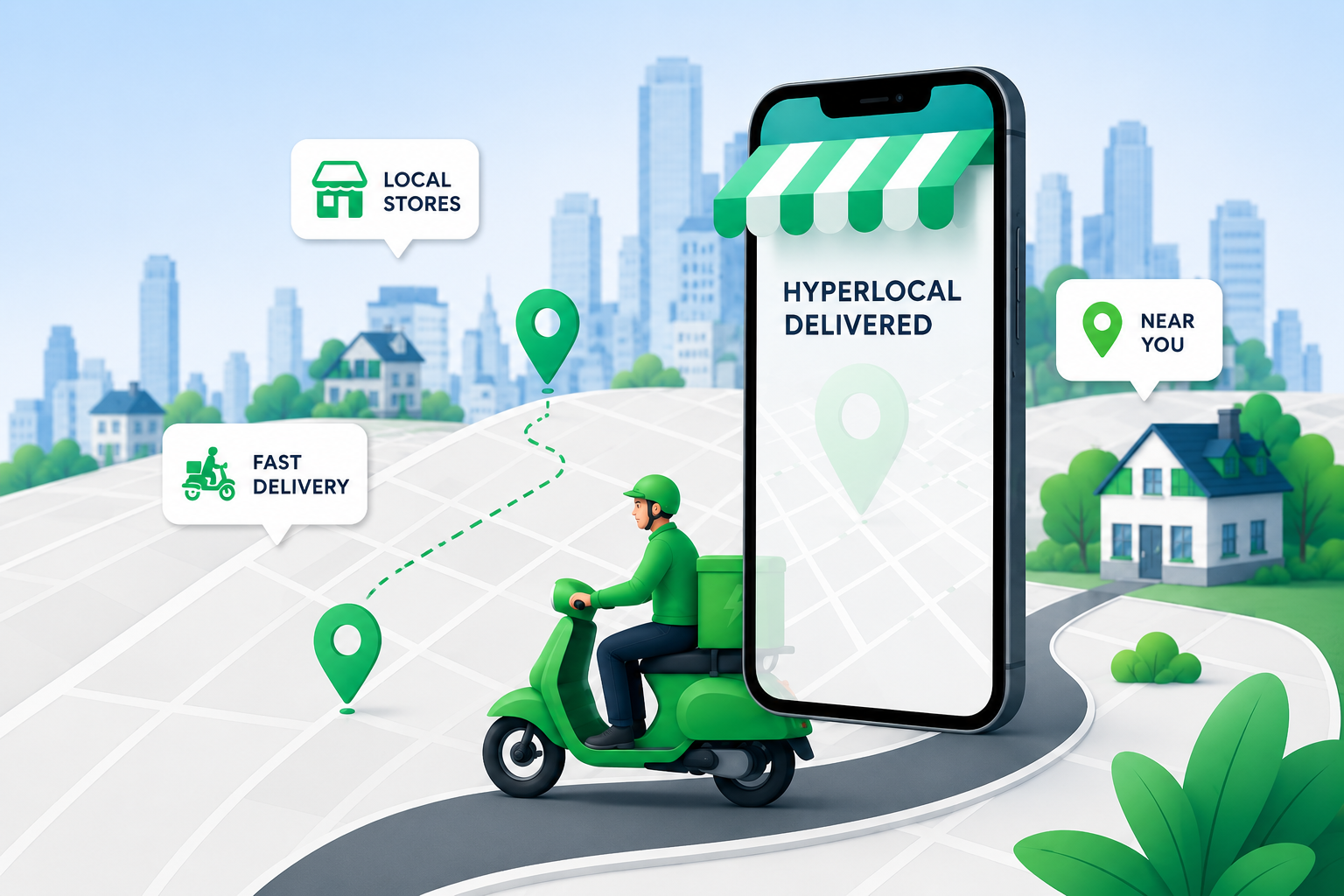
Quick recap before the numbers. Hyperlocal commerce means selling and delivering to customers within a small radius, usually your neighbourhood or a few kilometres around your shop. Orders are fulfilled from a nearby store or hub, not a faraway warehouse.
If you want the full breakdown of how the model works, we have covered it in detail in our post on what hyperlocal delivery is and how it works.
Now, the numbers.
How Big Is the Hyperlocal Market in India Right Now?
The short answer: big, and growing at a pace most industries would envy.
According to Makreo Research, the hyperlocal market in India is projected to grow at a 22% CAGR between FY 2026 and FY 2030. The drivers behind that number are familiar to anyone running a shop today: over 800 million internet users, rising incomes, and customers who now expect same-day or instant delivery as a default.
The quick-commerce players show just how quickly demand is moving. Swiggy Instamart reported 101% year-on-year growth in gross order value in Q4 FY 2025. In a single quarter, it added 316 dark stores and expanded its reach to 124 cities.
The infrastructure race tells the same story. According to Mordor Intelligence, India’s dark store count reached 1,489 by March 2026, a 67% jump in just 15 months. Average order values have climbed to around Rs. 485 as platforms have added categories such as electronics to their shelves.
And here is the stat that matters most for small store owners: as per the same Mordor Intelligence report, Tier-2 and Tier-3 city GMV grew 42% in 2025, outpacing the metros. Hyperlocal is no longer a Bengaluru and Gurgaon story. It is an Indore, Coimbatore, and Bhubaneswar story now.
One honest note: different research firms size this market differently because they define it differently. Some count only quick commerce, others include food delivery and home services. That is why we anchor on growth rates and verified platform numbers rather than one headline dollar figure.
What Is Driving This Growth?
Four forces are pushing the hyperlocal market in India forward, and you can see all of them play out on any street in any Indian city.
Quick commerce changed customer expectations
Once a customer gets a delivery in ten minutes during a Sunday lunch rush, waiting two days for anything feels slow. That expectation now applies to every purchase, including the ones from local stores.
UPI and WhatsApp removed the friction
Payments are solved. A customer in Nagpur can see your catalogue on WhatsApp, place an order, pay via UPI, and expect delivery the same evening. No cash handling, no card machines, no excuses.
Tier-2 and Tier-3 cities came online
Mordor Intelligence notes that smartphone penetration crossed 61% in rural areas, while vernacular apps made online ordering comfortable for first-time buyers. The next hundred million hyperlocal customers do not live in metros.
Festival seasons supercharge demand
Every Raksha Bandhan, sweet shops get flooded with last-minute orders. Every Diwali, local electronics and gifting stores see order spikes that quick commerce platforms fight over. Stores with their own online ordering capture that demand directly instead of losing it to an aggregator.
The Future of the Hyperlocal Market in India: 5 Trends to Watch
So where is this all heading? Based on what researchers and platform behaviour are showing, five trends stand out.
1. Dark stores will keep multiplying
The 67% growth in dark store count in fifteen months is not slowing down. Micro-fulfilment is becoming the backbone of fast delivery. We have written about how dark stores power hyperlocal retail and why even mid-sized retailers are experimenting with the model.
2. Smaller cities will lead the growth
With Tier-2 and Tier-3 GMV growing 42% in a year, platforms and local businesses alike are shifting focus beyond metros. If you run a store in a smaller city, you are sitting in the highest-growth zone of the entire market.
3. Local stores will launch their own channels
Aggregators take a serious cut. HSBC data reported by Reuters puts Zomato’s take rate at 24.4% and Swiggy’s at 21.9% of transaction value, far higher than global peers. Do the math on an Rs. 500 order: roughly Rs. 110 goes to the platform. On your own channel, the same order costs you a payment gateway fee and delivery, a fraction of that.
That gap is why more kirana stores, pharmacies, bakeries, and boutiques are launching their own websites and apps to own the customer relationship. Our roundup of hyperlocal marketplace software in India shows how crowded and mature this tooling has become.
4. WhatsApp will become a serious sales channel
For most local stores, WhatsApp is already where customers ask “bhaiya, stock mein hai kya?” And this is not an anecdote: a 2025 Kantar study cited by Meta found that 91% of online adults in India chat with a business weekly, the highest rate of business messaging in any market worldwide.
The next step is turning those chats into structured orders connected to real inventory, so nothing gets missed during a festival rush.
5. Delivery windows will keep shrinking
Ten minutes was a gimmick once. Now it is a benchmark. Customers will not always need that speed, but they will expect reliable same-day delivery from any store they order from, including yours.
What This Means for Your Store
Here is the plain takeaway: the hyperlocal market in India is growing whether you participate or not. The only question is who serves your neighbourhood’s online demand, you or a dark store two streets away.
The good news is that the entry barrier has collapsed. You no longer need a tech team or deep pockets to sell online. What you need is a storefront your customers can order from, a way to manage those orders alongside your counter sales, and delivery that works. We have covered the business model side in our guide to hyperlocal e-commerce, and the demand side in our post on hyperlocal marketing strategies.
How Zopping Helps You Claim Your Share
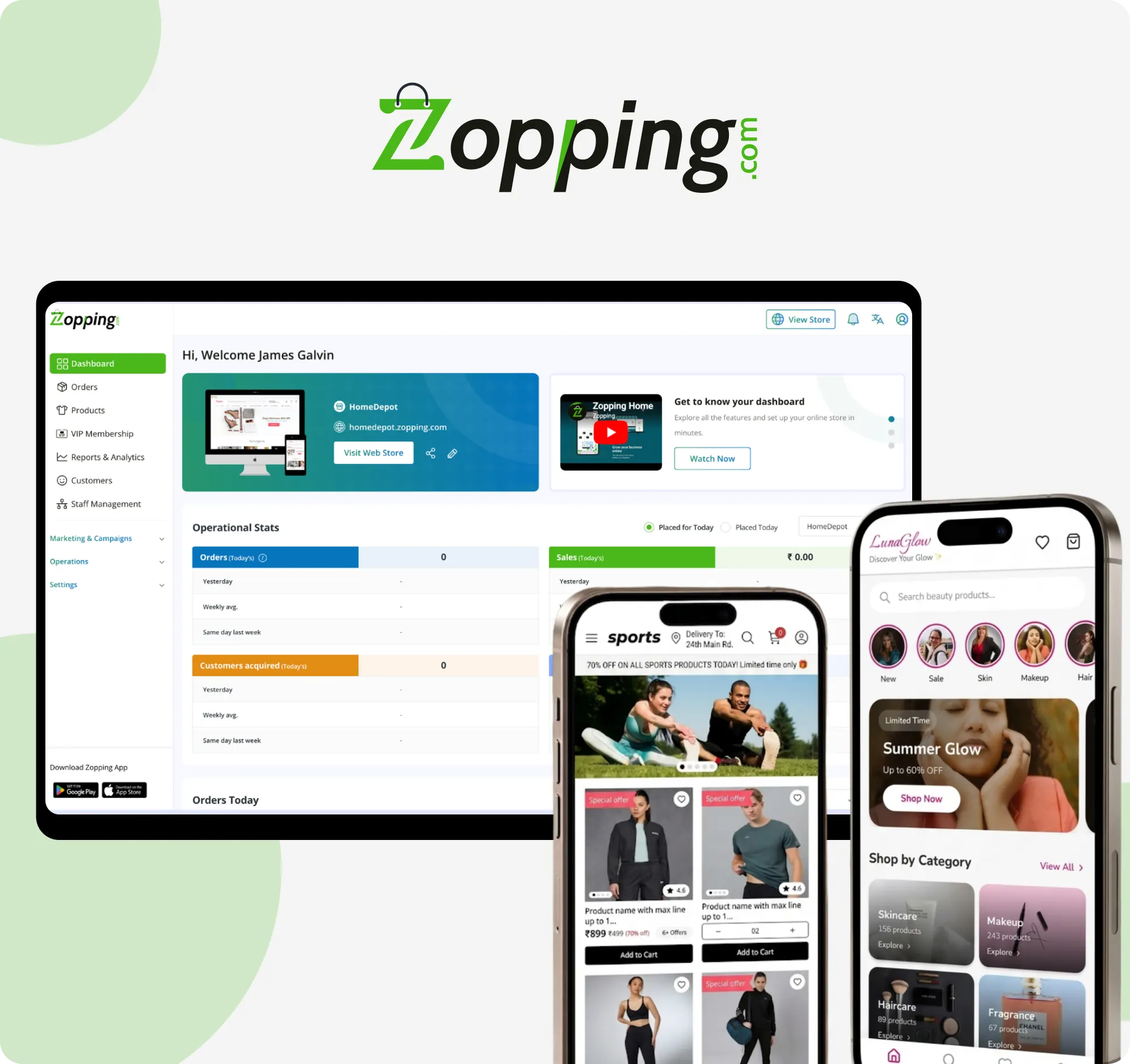
Zopping is built for exactly this shift. It helps local stores go online and run hyperlocal operations without writing a single line of code.
- Launch fast: Set up your own website and mobile app using ready-made themes, no developers needed.
- Manage everything in one place: Products, inventory, orders, and customers from a single dashboard, even across multiple store locations.
- Deliver locally: Assign deliveries, track them in real time, and integrate with local delivery partners so same-day delivery becomes routine, not a scramble.
- Sell the way India shops: Weight-based selling for groceries, festival-ready catalogues, and order management that keeps up when the Diwali rush hits.
We have gone deeper on this in how Zopping powers hyperlocal delivery businesses.
The market data says the wave is coming to your pin code, if it has not already. The stores that set up their own online channels now will own their neighbourhoods for the next decade.
Ready to claim your share of the hyperlocal boom? Book a free demo with Zopping and get your store online this week.
Frequently Asked Questions
How big is the hyperlocal market in India?
Makreo Research projects the hyperlocal market in India to grow at a 22% CAGR from FY 2026 to FY 2030. Exact size estimates vary across research firms because each defines the market differently, but every major report agrees that the growth rate is among the fastest in Indian retail.
Is hyperlocal only for big cities?
No. Tier-2 and Tier-3 cities recorded 42% GMV growth in 2025, faster than metros. Smaller cities are now the biggest growth engine of the market.
Can a small kirana store really compete with Blinkit or Zepto?
Yes, within its own neighbourhood. A local store already has the location, the inventory, and the customer trust. What quick commerce platforms have is technology, and tools like Zopping give that same capability to individual stores without the cost.
What is the future of the hyperlocal market in India?
Expect more dark stores, faster growth in smaller cities, WhatsApp-driven ordering, shrinking delivery windows, and more local stores launching their own websites and apps instead of depending only on aggregators.
How do I take my store into the hyperlocal market?
Start with your own online storefront, connect it to your existing inventory, and set up local delivery for a small radius around your shop. Zopping lets you do all three from one platform, with no coding required.