
Quick Links
ToggleIf you’ve spent even a few days with WooCommerce, you already know how this usually goes.
You start with a simple idea. Set up a store. Add a theme. Install a few plugins. Things look fine in the beginning.
Then slowly, things pile up. One plugin breaks another. Checkout needs fixing. Site speed drops. Hosting becomes a separate headache. And before you realise it, you’re spending more time managing the store than actually running your business.
That’s the point where most small retailers pause and think, “Is there an easier way to do this?”
And honestly, there is.
In this blog, we will take a look at why WooCommerce doesn’t always work for everyone and which platforms make more sense if you want something simpler, faster, and built for how retail actually works in India.
Why Consider WooCommerce Alternatives?
Here’s why you should consider WooCommerce alternatives:
-
Performance Challenges
WooCommerce works well when things are light. But once you start adding products, plugins, and traffic, performance becomes something you have to actively manage.
Pages take longer to load. Checkout slows down. And suddenly, you’re reading about caching tools and CDN setups when all you wanted was a working store.
-
Technical Complexity
The flexibility WooCommerce offers is also what makes it heavy. You’re expected to handle updates, compatibility issues, plugin conflicts, and theme tweaks.
If you’re not from a technical background, this doesn’t feel like running a business. It feels like maintaining a system.
-
Hosting Management
With WooCommerce, hosting is your responsibility. That means uptime, backups, security, and server performance are all on you or someone you hire.
For a small retailer, this is just extra work that doesn’t directly help you sell more.
-
Hidden Costs
At first, WooCommerce feels low-cost. But then come paid plugins, premium themes, better hosting, and sometimes developer support.
The total cost slowly creeps up, and it’s not always predictable.
-
Scalability Issues
As your store grows, so does the complexity. More products, more traffic, more integrations.
Scaling a WooCommerce store is possible, but it usually needs effort, planning, and sometimes a full rebuild.
8 WooCommerce Alternatives for Small Retailers in India
| Platform | Ease of Use | Pricing (Starting) | India-Friendly (UPI, COD) | Best For |
|---|---|---|---|---|
| Zopping | Very Easy | ₹4,167/month | Strong India focus | Small retailers & local businesses |
| Shopify | Very Easy | ₹1,499/month | Yes (via integrations) | Scaling D2C brands |
| Instamojo | Easy | Free | Strong India support | Solo sellers & creators |
| BigCommerce | Moderate | $29/month+ | Yes | Scaling businesses |
| Squarespace | Easy | ₹630/month | Limited | Creative brands |
| Zoho Commerce | Easy | ₹590/month | Strong India ecosystem | Zoho users & SMBs |
| Ecwid | Easy | ₹450/month | Yes | Existing websites |
| OpenCart | Moderate | Free (open-source) + hosting cost | Depends on setup | Tech-savvy users |
-
Zopping (Best Overall for Indian Retailers)
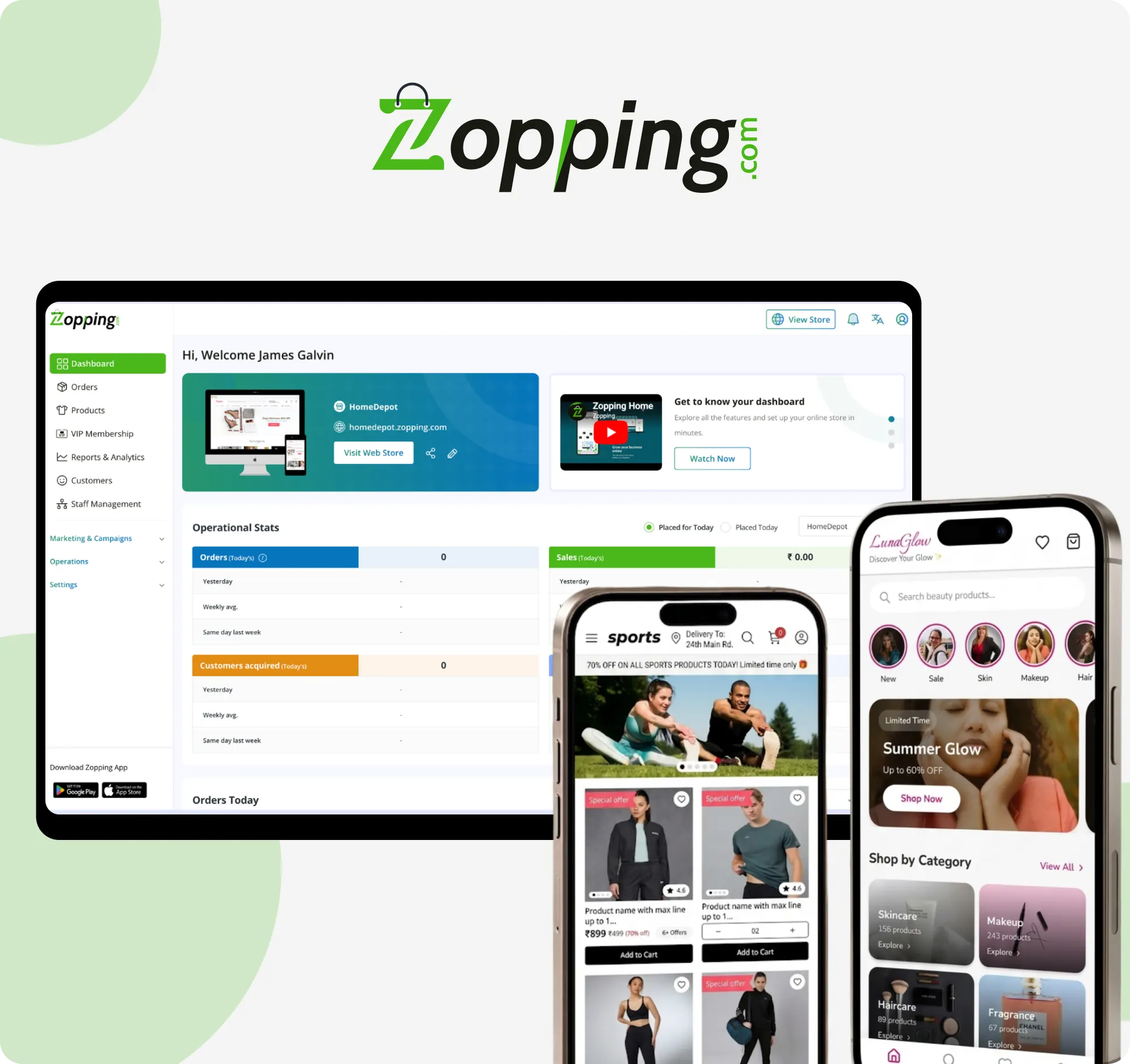
Zopping is a no-code, hyperlocal ecommerce platform built for retailers who want to sell online without getting stuck in technical setup. It allows you to create your online store, launch mobile apps, and manage deliveries from one place.
What makes it stand out is its strong focus on local commerce. You can manage inventory, accept payments through UPI or cash, and handle delivery operations without relying on multiple tools. It is designed to help Indian retailers move faster and run their online business smoothly, especially when dealing with quick and local deliveries.
Key Features
- No-code storefront with hosting, domain support, and ready-to-use themes
- Android and iOS apps for customers, along with delivery and picker apps
- Central dashboard for orders, inventory, and multi-store operations
- Support for slot-based delivery, pre-orders, and weight-based pricing
- Team access, notifications, and built-in communication tools
Pros
- Designed specifically for Indian retail use cases.
- All-in-one platform reduces dependency on plugins and third-party tools.
- Includes mobile apps without extra cost.
- Transparent pricing without commissions on orders.
Cons
- Smaller ecosystem compared to global platforms like Shopify.
Pricing
Basic: Setup fees is ₹30,000 per year for small stores with limited SKUs and themes.
Business: Setup fees is ₹1,00,000 per year with higher limits and mobile apps included.
Enterprise: Custom pricing with advanced features and support.
-
Shopify
Shopify is usually the first name people come across when they start looking beyond WooCommerce. And for good reason. It removes a lot of the technical stress right away.
You don’t think about hosting. You don’t worry about updates. You don’t spend time fixing broken plugins. The platform handles all of that in the background, which is a big relief if you’ve already dealt with WooCommerce issues.
What makes Shopify interesting is not just how easy it is to start, but how far you can take it. Many brands begin small and continue using it as they grow.
At the same time, there is a trade-off. The simplicity comes with recurring costs. And as you add apps and features, the monthly expense can increase more than expected.
Key Features
- Hosted store with themes and secure checkout
- Multi-channel selling across social platforms
- Large app marketplace
- POS system for offline sales
Pros
- Very easy to set up and manage
- Handles scale without manual optimisation
- Strong ecosystem of apps and partners
Cons
- Costs increase with apps and add-ons
- Transaction fees in certain cases
Pricing
- Starts around ₹1,499 per month
- Higher plans unlock more features and lower fees
Read More : Shopify Alternatives -
Instamojo
Instamojo started as a payment solution, and that background still shows in how the platform works today.
If your main goal is to start selling and collecting payments without too much setup, it feels very straightforward. Payments, store, and basic marketing tools are already connected.
It is especially useful for small retailers who don’t want to deal with multiple integrations just to accept UPI or COD.
That said, it is not built for heavy customisation. It works best when you want something simple that just works.
Key Features
- Online store with integrated payments
- UPI, cards, wallets, and COD support
- Shipping and order management
- Landing pages and payment links
Pros
- Very easy to start with
- Strong India-first payment support
- Multiple tools in one platform
Cons
- Transaction fees on every sale
- Limited design flexibility
Pricing
- Free plan available
- Paid plans start around ₹6,999 per year
-
BigCommerce
BigCommerce usually comes up when someone says, “I don’t want to deal with WooCommerce anymore, but I also don’t want to keep adding apps like Shopify.”
It sits in a slightly different space. You get a lot of features built into the platform itself, which means you don’t have to depend on external plugins for basic things. That alone makes a difference if you’ve dealt with plugin chaos before.
It is also built with growth in mind. If your plan is to scale beyond a small store and handle larger product catalogs or multiple channels, BigCommerce starts to make more sense.
That said, it can feel like more than what a very small retailer needs in the beginning.
Key Features
- Hosted store with advanced catalog and product filtering
- Multi-channel selling across marketplaces and social
- No additional transaction fees from the platform
- Support for advanced integrations and headless setups
Pros
- Strong built-in features reduce reliance on apps
- Handles scale well
- No platform transaction fees
Cons
- Pricing may feel high for small retailers
- Not as India-focused as some local platforms
Pricing
- Starts around $39 per month
- Higher tiers unlock more features and limits
Read More : BigCommerce Alternatives -
Squarespace
Squarespace is known for its clean design and premium templates. It works well if your store is also your brand website and you care about how everything looks and feels.
It is a good option for small retailers who focus on branding, storytelling, and visual presentation.
Key Features
- High-quality templates with built-in design structure
- Product catalog and basic ecommerce tools
- Blogging and content support
Pros
- Clean and professional design out of the box
- Simple setup without technical steps
- Works well for brand-focused stores
Cons
- Limited advanced ecommerce features
Pricing
- Starts around $192 per year
- Higher plans unlock full ecommerce features
-
Zoho Commerce
Zoho Commerce makes the most sense when you are already using other Zoho tools.
If your accounting is on Zoho Books, your CRM is on Zoho, and your inventory is managed there, then adding Zoho Commerce feels like extending your existing setup instead of starting from scratch.
That integration is where it shines. Orders, payments, inventory, and customer data all connect smoothly without needing third-party tools.
On its own, the platform is solid. But its real strength shows when it is part of the larger Zoho ecosystem.
Key Features
- Hosted store with product and order management
- 0 percent transaction fees
- Integration with Zoho Books, CRM, and Inventory
- Multi-channel selling options
Pros
- Strong backend integration
- No transaction fees
- India-friendly pricing
Cons
- Design flexibility is limited
- Interface can feel slightly complex at first
Pricing
- Starts around ₹599 per month
- Higher plans add more features and limits
-
Ecwid
Ecwid is different from most platforms because it allows you to add ecommerce to an existing website instead of building one from scratch.
This makes it a good option if you already have a website or want a lightweight setup.
Key Features
- Embeddable store for existing websites
- Instant site builder option
- Multi-channel selling across platforms
- No platform transaction fees
Pros
- Works well with existing websites
- Free plan available
- No transaction fees
Cons
- Less tailored for Indian retail needs
- Advanced features require upgrades
Pricing
- Free plan available
- Paid plans start around $19 per month
-
OpenCart
OpenCart feels familiar if you have used WooCommerce. It is open-source, flexible, and gives you full control over your store.
But that also means the responsibility stays with you. Hosting, security, updates, and performance are all things you need to manage or outsource.
For someone with technical knowledge or access to a developer, this can be a good option. You are not tied to a platform, and you can customise almost everything.
For most small retailers, though, it can feel like going back to the same challenges they wanted to leave behind.
Key Features
- Self-hosted ecommerce platform
- Large library of themes and extensions
- Full control over code and setup
Pros
- No platform fee
- Highly flexible
- Large extension ecosystem
Cons
- Requires technical knowledge
- Maintenance and hosting responsibility
Pricing
- Free core platform
- Additional costs for hosting, themes, and development
Why Choose Zopping?
If you look at all these platforms, you’ll notice something. Most of them are either built for a global audience or expect you to adapt your business to how the platform works.
Zopping takes a different approach. It starts with how Indian retail actually functions and builds around that.
-
Built Specifically for Indian Retailers
This is not a platform that was adapted later for India. Features like local delivery flows, inventory handling for daily-use items, and multi-store management are already part of the system.
-
Simple, No-Code Store Setup
You are not dealing with plugins or technical setup. You create your store, add products, and start selling. That’s it.
-
All-in-one Platform
Catalogue, payments, orders, storefront, and delivery workflows all live in one place. You don’t switch between tools or worry about integrations breaking.
-
Supports UPI, COD, and Local Payment Gateways
Your customers can pay the way they are used to. No extra setup required.
-
Easy Product and Inventory Management
Whether you are managing one store or multiple outlets, inventory updates and order tracking stay simple and organised.
-
Mobile-friendly Storefronts
Most of your customers are on their phones. The storefront is built keeping that in mind from the start.
Ready to Go Digital? Start Selling Online with Zopping!
Closing Thoughts
There is nothing wrong with WooCommerce. It still works well for businesses that have the time or technical support to manage it.
But if you are a small retailer trying to move online, you probably don’t want to spend your time fixing plugins or managing hosting. You want something that works without constant effort.
That is where these alternatives come in. Some give you more design control. Some focus on simplicity. Some are built for scale.
The right choice depends on how you run your business and how much complexity you are willing to handle.
For many Indian retailers today, Zopping serves as the easiest option to get started.
FAQs
What is the best WooCommerce alternative for small retailers in India?
It depends on your needs, but platforms like Zopping are built specifically for Indian retail, which makes them easier to use for local businesses.
Why do small businesses look for alternatives to WooCommerce?
Mostly because of technical complexity, plugin management, and ongoing maintenance effort.
Which WooCommerce alternatives support UPI and COD in India?
Zopping, Instamojo, and Dukaan support UPI and cash on delivery.
Are there free WooCommerce alternatives available?
Yes, platforms like Dukaan, Ecwid, and Instamojo offer free plans with limited features.
Can I migrate my WooCommerce store to another platform?
Yes, most platforms provide migration tools or support to help you move your data.
Do I need technical skills to use WooCommerce alternatives?
Not necessarily. Many modern platforms are designed for non-technical users and offer no-code setups.