
Quick Links
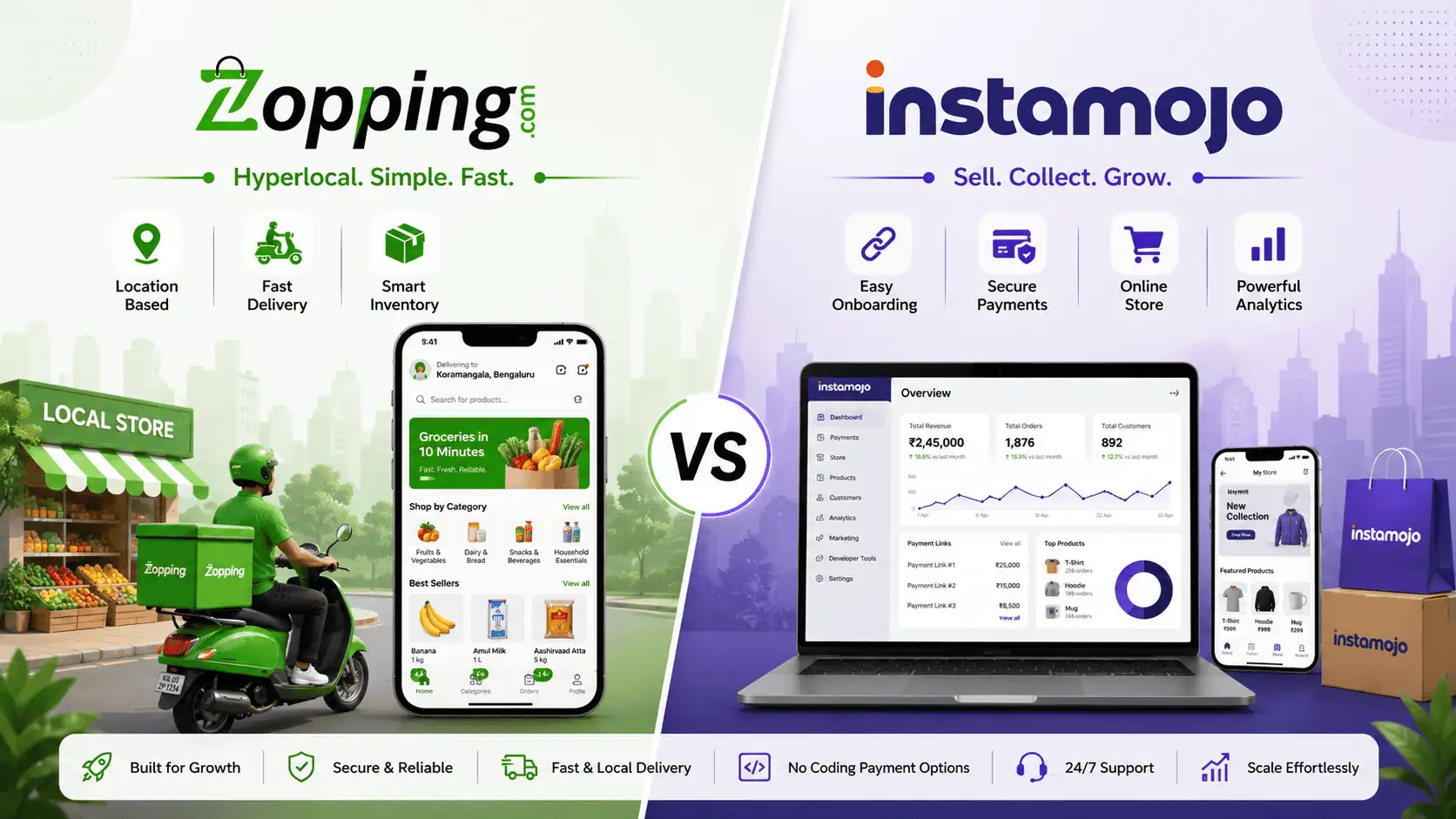
ToggleIf you are trying to take your business online, chances are you have come across both Zopping and Instamojo. At first glance, they may seem similar. Both help you sell online. Both are built with Indian businesses in mind. But once you look closer, they solve very different problems.
Zopping is built as a hyperlocal ecommerce + delivery-focused platform. It is designed for businesses that sell physical products and need to manage orders, deliveries, and operations within a local area.
Instamojo, on the other hand, started as a payments platform. Over time, it added a simple online store feature. It works well for people who want to collect payments or sell basic products without setting up a full ecommerce system.
In this post, we will break down what each platform does, who they are built for, where each one performs well, and how to decide which one fits your business better.
What is Instamojo?
Instamojo is an Indian platform that helps small businesses and individuals accept payments and sell online without needing a full website setup. It began as a payment gateway but has gradually added features like online storefronts, landing pages, and basic eCommerce tools.
The idea is simple. If you want to start selling quickly, you can create a basic store, upload products, and start accepting payments through UPI, cards, wallets, or net banking. You can also share payment links directly on WhatsApp or social media, which makes it easy to collect money without building a full-fledged online store.
For many early-stage sellers, this removes the usual problems. You do not need technical knowledge. You do not need a developer. You just set things up and start selling.
Who is Instamojo Built For?
Instamojo is mainly designed for people who want a quick and straightforward way to start selling online.
It works well for:
-
Small and Medium Businesses
If you are running a small setup and want to go online without hiring developers, Instamojo gives you a starting point.
-
D2C Brands Just Starting Out
New brands that are testing products or validating demand can use Instamojo to set up a basic store and begin selling directly.
-
Freelancers and Service Providers
If you are a consultant, designer, or trainer, you can use payment links to collect fees without building a full website.
-
First-Time Entrepreneurs
For someone just getting started, the platform feels approachable. You can create pages, list products, and begin selling without technical barriers.
Typical Use Cases
You will often see Instamojo used by content creators selling digital products, small fashion or handmade brands, home-based sellers, coaching centres, and even event organisers selling tickets.
Key Strengths of Instamojo
Instamojo has built its reputation around simplicity and accessibility. Here are some areas where it performs well:
-
Quick Setup
You can create a store and start accepting payments within minutes. The interface is simple and does not require prior experience.
-
All-in-One Starter Setup
It combines payments, a basic storefront, landing pages, and some marketing tools in one place. This is helpful for users who do not want to manage multiple tools early on.
-
Affordable Entry Point
There is no heavy upfront cost. This makes it easier for small sellers or individuals to begin without financial pressure.
-
Flexible Payment Collection
Payment links are one of its strongest features. You can share them anywhere and collect money through multiple payment methods.
-
Built for Indian Users
It supports local payment preferences and is designed with Indian small businesses in mind.
-
Basic Analytics
You get access to simple reports on sales, customers, and store performance, which helps in tracking progress.
Honest Limitations When Compared to Zopping
Instamojo does a good job as a starter platform. But if your business depends heavily on operations and delivery, you may start noticing gaps.
-
Not Built for Logistics-Heavy Businesses
If your business relies on fast, local deliveries, Instamojo does not offer deep control over logistics. It works, but it is not designed for high-frequency delivery operations.
-
Limited Delivery Management
You do not get advanced tools for managing delivery zones, assigning riders, or tracking orders in real time. For hyperlocal businesses, this becomes a serious limitation as you scale.
What is Zopping?
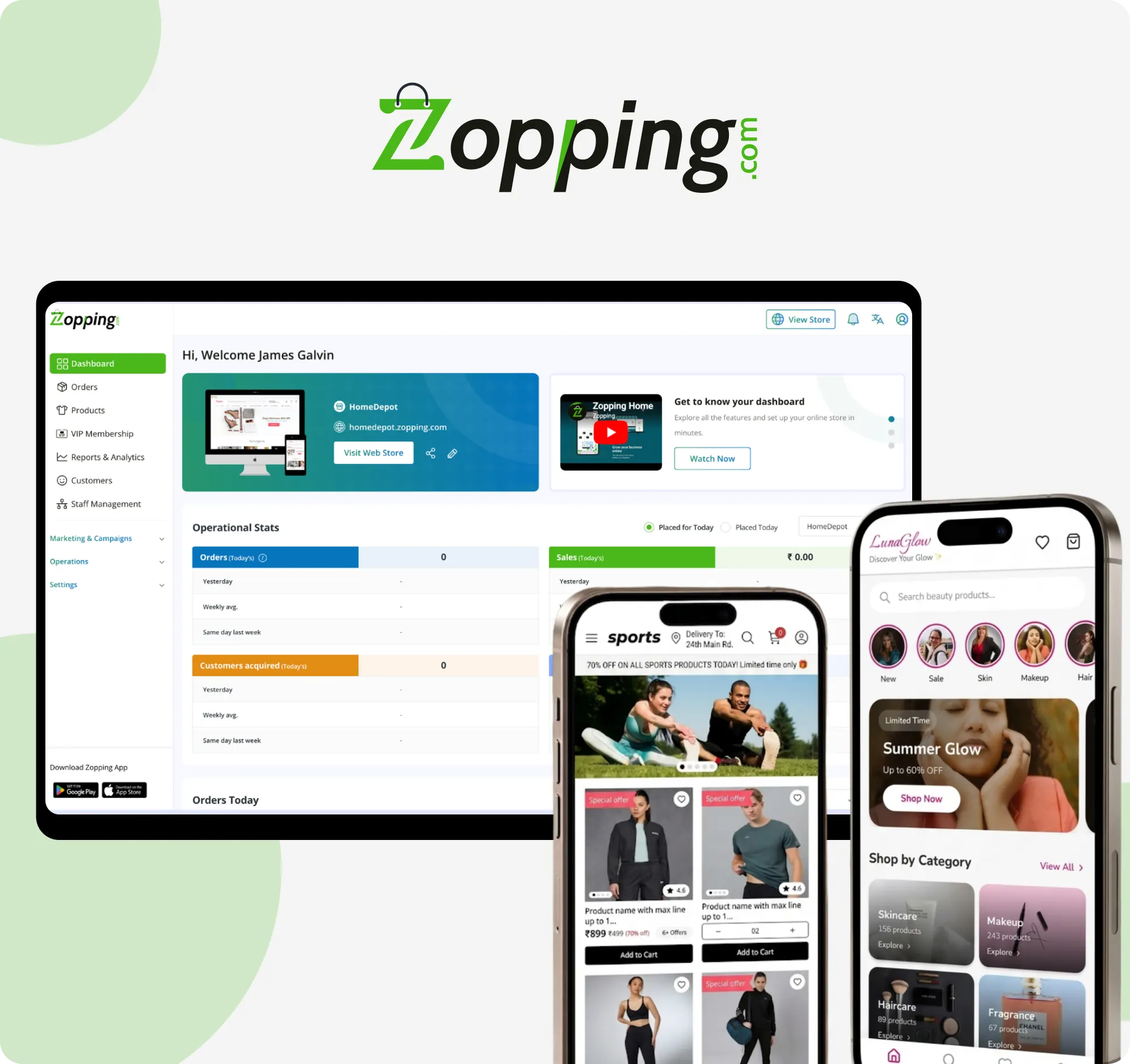
Zopping is a no-code, all-in-one eCommerce and hyperlocal platform designed to help businesses launch and scale online without technical skills. It goes beyond just helping you create a store. It gives you the full system needed to run a delivery-first business.
It is positioned as a hyperlocal eCommerce platform for India, built specifically for businesses that serve customers within a defined local area.
Zopping includes three core products:
- Zop Store for building your online store and app
- Zop Delivery Management System for handling logistics and delivery operations
- Zop Marketing and Promotions for customer engagement and growth
It is designed for businesses like grocery stores, pharmacies, restaurants, fashion outlets, and meat shops that want to sell online and deliver locally without relying on third-party aggregators.
What Makes Zopping Stand Out?
Zopping is built with operations in mind, not just storefronts. Here is what sets it apart:
-
No-Code Store Builder
You can launch a fully branded website and mobile app without technical skills. In many cases, businesses go live within a couple of days.
-
Multi-Store Management
If you operate multiple outlets, you can manage inventory, orders, and payments from a single dashboard. This is useful for franchises or expanding brands.
-
Hyperlocal Delivery Ecosystem
Zopping includes apps and tools for store owners, staff, and delivery agents. You can assign orders, track riders, and optimize delivery routes in real time.
-
All-in-One Operations
From payments to CRM to marketing tools, everything is available in one system. This reduces the need to connect multiple third-party tools.
A simple way to understand this is through real scenarios. If you run a pharmacy and need to deliver medicines within a 3 km radius on the same day, Zopping allows you to manage that directly. You can define delivery zones, assign riders, and track every order without leaving the platform.
Quick Comparison: Zopping vs Instamojo
| Feature / Aspect | Zopping | Instamojo |
|---|---|---|
| Platform Type | Built mainly for hyperlocal eCommerce businesses that handle nearby deliveries. | Started as a payments platform, with added tools to sell products online. |
| Online Store Setup | No-code setup. You can quickly create a full store without technical knowledge. | Simple store builder. Works well for basic product listings and quick setup. |
| Hyperlocal Delivery Management | Fully built-in system to handle local deliveries from order to doorstep. | Not available. You need third-party tools if you want delivery handling. |
| Branded Mobile App | Comes with your own branded app for customers. | Does not provide a custom branded app. |
| Rider / Delivery Management | You can manage riders, assign orders, and track deliveries within the platform. | No built-in delivery or rider management. |
| Delivery Radius Control | You can set delivery areas based on distance or location. | No option to control delivery zones. |
| Product Catalogue Size | Supports medium to large catalogues, suitable for stores with many products. | Better for small to medium catalogues. Not ideal for very large inventories. |
| Payment Gateway Options | Supports multiple payment options, giving flexibility to businesses. | Strong payment system since this is their core offering. |
| Order Management Dashboard | Detailed dashboard with order tracking, updates, and control over operations. | Basic dashboard with limited control and fewer features. |
| Multi-location Support | Supports multiple store locations, useful for growing businesses. | Limited support. Not ideal if you run operations from multiple places. |
| Integrations & Ecosystem | Offers a decent range of integrations for business needs. | Also supports integrations, but mainly focused around payments and simple tools. |
| Analytics & Reporting | Built-in reports to track orders, sales, and performance. | Basic insights available, but not very detailed. |
| Marketing & Promotions | Comes with built-in tools for offers, discounts, and campaigns. | Limited marketing features. You may need external tools. |
| ONDC Integration | Supports ONDC use cases, helping businesses reach a wider network. | Not a primary focus area. |
| Aggregator Independence | High. You can run your own system without relying on third-party marketplaces. | Moderate. More suited for independent sellers but not built for full-scale operations. |
| Pricing Model | Subscription-based. You pay a fixed amount to use the platform. | Combination of subscription and transaction charges. |
| Best Suited For | Local delivery businesses, grocery stores, pharmacies, and hyperlocal brands. | Creators, freelancers, and small sellers who want a simple way to sell online. |
Where Instamojo Has the Edge
To keep things fair, there are areas where Instamojo performs better.
-
Strong Payment Infrastructure
Payments are its foundation, and it handles them smoothly.
-
Great for Digital Products
If you are selling courses, ebooks, or services, Instamojo fits well.
-
Simple Onboarding
You can start quickly without much setup.
-
Works Well for Creators
Content creators and freelancers benefit from its simplicity.
Where Zopping Has the Edge
Zopping is built for businesses that need more than just a payment solution. It is better than Instamojo because of features like:
-
Built-In Delivery Management
You do not need third-party tools. Everything from order assignment to delivery tracking is handled within the platform.
-
Branded Customer App
Your customers order from your own app, not a shared marketplace.
-
Handles Large Catalogues
You can manage complex inventories without slowing down operations.
-
Delivery Zone Control
You can define service areas, set delivery rules, and manage fulfilment efficiently.
-
Designed for Indian Hyperlocal Commerce
It is built specifically for how local businesses operate in India.
-
Scales Easily
You can start with one store and expand to multiple locations without switching platforms.
-
Real-World Use Case
If you run a grocery store and need to deliver groceries within a 5 km radius on the same day, Zopping supports that directly. You can assign orders, track riders, and manage fulfilment without juggling multiple tools.
-
Better for Physical Product Businesses
If your business depends on inventory and delivery, Zopping fits naturally.
Who Should Choose Instamojo?
Instamojo makes sense if your needs are simple and focused on payments:
- Digital creators selling courses or content
- Freelancers collecting payments
- Small online sellers testing products
- Businesses that do not require delivery management
- Anyone who wants a quick and simple way to start
Who Should Choose Zopping?
Zopping is better suited for businesses that depend on operations and delivery:
- Grocery stores, pharmacies, restaurants, fashion and meat businesses
- Businesses that want to manage delivery in-house
- Sellers who want customers to order directly instead of using aggregators
- Brands that want their own app and customer experience
- Businesses planning to expand to multiple locations
- Owners who want full control over customer data and operations
Closing Thoughts
Both platforms solve different problems. Instamojo helps you start quickly and collect payments without complexity. Zopping is built for businesses that need structure, control, and scalability.
If your goal is to test an idea or sell digital products, Instamojo can work well. But if you are running or planning a serious hyperlocal business where delivery, operations, and customer experience matter every day, Zopping is built with that reality in mind.
FAQs
What is the main difference between Zopping and Instamojo?
Instamojo focuses on payments and simple online selling. Zopping provides a complete hyperlocal commerce system with delivery and operations built in.
Is Zopping better than Instamojo for grocery or hyperlocal businesses?
Yes. For businesses that depend on local delivery, Zopping offers tools that Instamojo does not provide natively.
Can Instamojo manage hyperlocal delivery?
Not in a detailed way. It supports shipping, but it does not offer advanced delivery management features like rider tracking or zone control.
Which platform is better for a grocery or pharmacy store in India?
For these businesses, Zopping is usually a better fit because it is designed for hyperlocal delivery and daily operations.
Is there a free plan on Zopping like Instamojo?
Instamojo offers a very low-cost entry. Zopping focuses more on providing a full operational system, so pricing depends on the features and scale you need.