

Quick Links
ToggleKey Takeaways
- Odoo may not suit every Indian e-commerce seller due to its complex setup, rising costs, limited local support, and feature restrictions in the free version.
- Zopping stands out as a strong Indian alternative, offering a no-code, beginner-friendly platform with built-in features like ONDC integration, inventory management, and local payment support.
- Other notable alternatives include Zoho One, Shopify, ERPNext, WooCommerce, Tally Prime, and Oracle NetSuite, each catering to different business sizes and technical needs.
- When choosing an alternative, it’s important to evaluate total cost, local customer support, integration with existing tools, and ease of use—not just features on paper.
- Zopping is built with Indian MSMEs and D2C brands in mind, making it a practical and affordable option for those looking to launch or scale their online business quickly.
If you’re running an online store in India, you’ve probably come across Odoo. It’s known for being a flexible ERP platform that covers everything from inventory to sales. But let’s be honest, it’s not always the perfect fit for every business. Maybe it’s too complex, too expensive, or just not tailored enough for the Indian market. The good news is, there are other options out there. In this guide, we’ll walk you through the top Odoo alternatives that are better suited for Indian e-commerce sellers like you. Whether you’re looking for something easier to use, more affordable, or better integrated with local tools, there’s a solution waiting. Let’s get started.
What is Odoo?
Odoo is open-source business software that brings together a range of apps to help you manage different parts of your company. Whether it’s sales, accounting, inventory, or HR, everything works in one connected system. Since it’s modular, you can start with just what you need and add more apps as your business grows.
Why Consider an Odoo Alternative?
-
Complex Setup and Customisation
While Odoo offers great flexibility, setting it up can be tricky. Many businesses find that it requires technical knowledge or professional help to configure and customise. If you don’t have an IT team, the setup process can take time and become a bit overwhelming.
-
Cost
Even though Odoo is open-source, going beyond the basics can get expensive. You might need to pay for extra apps, third-party modules, or developer support. For some businesses, especially smaller ones, the costs can add up faster than expected.
-
Support and Localisation
Support can be a hit or miss depending on where you’re located. If your business operates in a region where Odoo’s local presence is limited, getting timely help or finding experts who understand your market can be a challenge.
-
Feature Access
Some features are only available in the enterprise version, which means you might not get everything you need in the free or community version. If you’re expecting full functionality from the start, this can feel limiting unless you’re ready to upgrade.
-
Ease of Use
Odoo’s interface is functional, but it can feel complex for beginners. If your team is not used to working with ERP systems, there might be a learning curve before everyone gets comfortable. Businesses looking for something simpler and more intuitive might prefer exploring alternatives that are easier to use right from the start.
Top Odoo Alternatives for Indian E-commerce Sellers
Here’s a comparison of some of the top Odoo alternatives used by Indian e-commerce sellers:
| Platform | Main Features | Pricing (Approx.) |
|---|---|---|
| Zopping | Zopping is a no-code platform designed for businesses that want to create an online store or mobile app quickly. It includes tools for product listings, order management, and marketing. Sellers can also handle deliveries and customer interactions from one dashboard. | Basic plan: around ₹4,000 per month
Business plan: around ₹12,000 per month Enterprise plan: custom quote based on requirements |
| Zoho One | Zoho One brings together more than 40 business applications under one platform. It covers CRM, accounting, HR, inventory, and project management. The system allows automation and centralised control, which helps sellers manage all their business functions without switching tools. | All employee pricing: about ₹1,200 per month per user Flexible user pricing: about ₹3,500 per month per user |
| Oracle NetSuite | A cloud-based ERP suite that combines finance, CRM, and inventory with e-commerce modules. It is known for high customisation and advanced reporting tools. Medium and large Indian sellers use it for end-to-end automation and real-time analytics. | Custom pricing depending on scale. For small to mid-sized businesses, costs generally range between ₹6 lakh to ₹8 lakh per year or higher. |
| ERPNext | An open-source ERP solution built in India. It includes accounting, HR, CRM, manufacturing, and retail modules. It’s suitable for sellers who prefer self-hosting or need full control over their system. The interface is simple, and the software can be customised easily by developers. | Free for self-hosted users. Cloud hosting starts at about $10 (₹830) per user per month. |
| Shopify | Shopify is one of the most popular e-commerce platforms globally. It offers store design templates, integrated payment gateways, and tools for inventory, order, and shipping management. It’s easy to set up, making it suitable for new entrepreneurs and established brands alike. | Basic plan: starts at around ₹1,500 per month
Grow plan: around ₹5,600 per month Advanced plan: around ₹22,000 per month Plus plan: about ₹1.75 lakh per month |
| WooCommerce | WooCommerce is a WordPress plugin that turns a regular website into an online store. It’s open-source and gives complete design flexibility. Sellers can add extensions for payments, shipping, and analytics. It’s best suited for those who already use WordPress. | The core plugin is free. Hosting and add-ons may cost between ₹500 and ₹5,000 per month depending on usage. |
| Tally Prime | Tally Prime is well known for accounting and GST compliance in India. It also supports payroll, inventory tracking, and banking. It’s a good option for small businesses that prefer desktop-based software with online syncing options. | Monthly plan: around ₹750 plus GST
Lifetime plan: around ₹22,500 plus GST |
What Are the Key Features to Consider When Choosing an Alternative to Odoo?
-
Identify Your Core Needs
Before you look at any platform, take a step back and think about what your business truly needs. Are you mainly looking for inventory control, accounting tools, CRM features, or a full ERP setup? Make a list of the functions that matter most to your daily operations. This helps you focus only on options that actually solve your problems instead of getting distracted by features you may never use.
-
Evaluate Integration
Your new system should blend smoothly with the tools you already use. Check if it integrates easily with your payment gateways, e-commerce platforms, or marketing software. Seamless integration saves time, reduces data errors, and makes sure your business processes stay connected. The smoother the integration, the less time you’ll spend fixing tech issues later.
-
Check Local Support
Customer support can make or break your experience with any ERP or business platform. Look for a provider that offers reliable support in your region and preferably in your local language. Having quick access to help when you face technical problems or setup issues can save you a lot of downtime and frustration.
-
Consider Total Cost
Don’t just look at the price tag on the plan. Think about the overall cost, including setup fees, customization, maintenance, and future upgrades. Sometimes, cheaper plans can cost more in the long run if you need frequent add-ons or developer support. Compare what each plan includes and pick the one that fits your budget without compromising on performance or scalability.
Why Choose Zopping as Your Odoo Alternative?
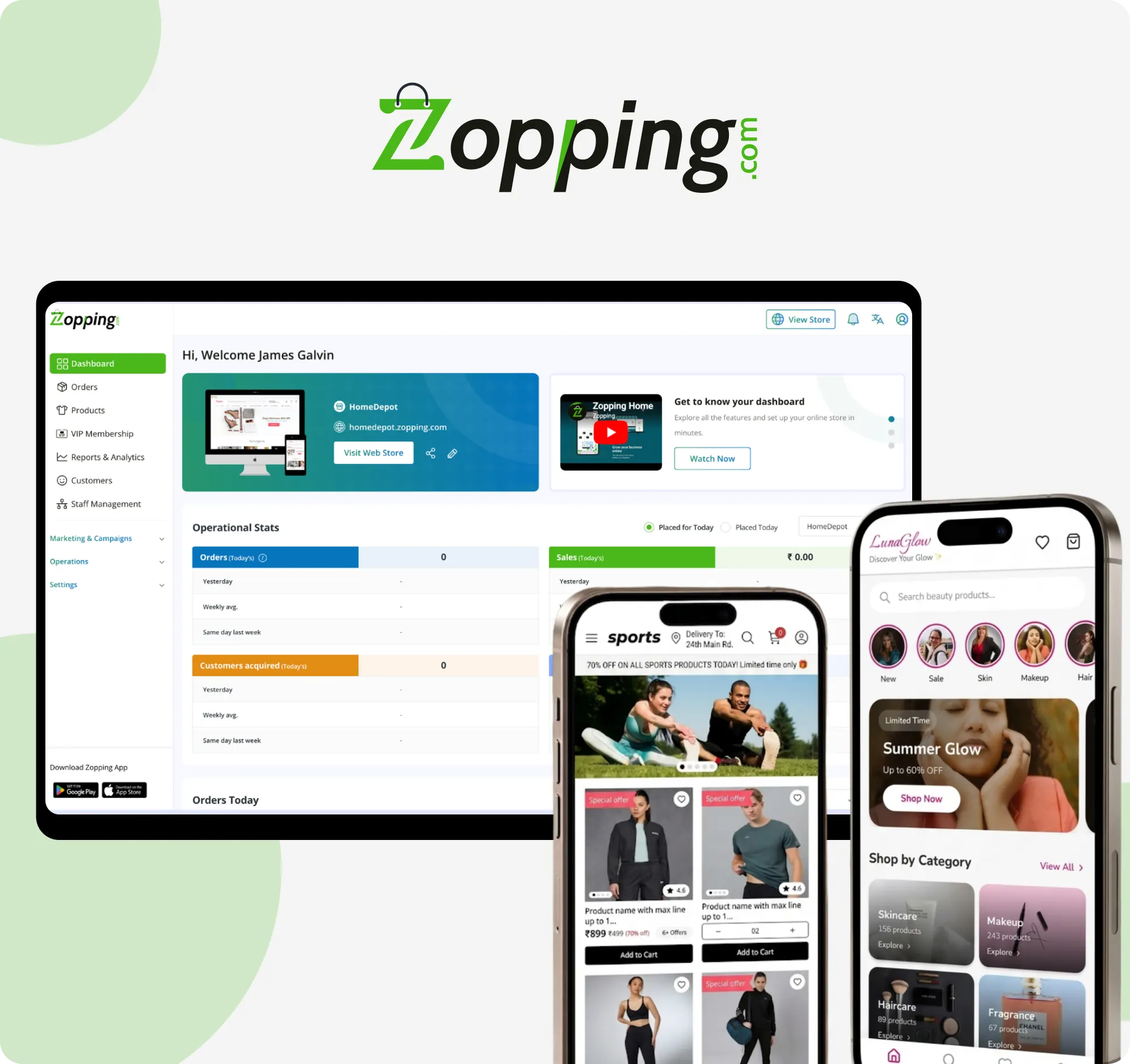
If you’re tired of clunky dashboards, endless configurations, and a platform that feels more complicated than helpful, it might be time to switch. Zopping is built with Indian e-commerce sellers in mind. Whether you’re just starting out or scaling up, it gives you everything you need to run your online business smoothly.
You get a no-code platform that lets you build your website, manage inventory, accept payments, and connect to ONDC. Everything happens from one simple dashboard. The interface is clean, the tools are powerful, and you don’t need a tech team to get things up and running. Plus, with local customer support and pricing that actually makes sense for Indian sellers, Zopping helps you grow without burning a hole in your pocket.
If Odoo feels too heavy for your needs, Zopping offers a lighter and faster solution that fits right into your workflow.
Ready to grow?
Frequently Asked Questions (FAQs)
What’s the biggest difference between Odoo and Zopping?
Odoo is a full-scale ERP with a lot of complex modules, while Zopping is built to be simpler and more focused. It’s designed specifically for Indian e-commerce sellers who want to launch and manage their store without coding or complicated setups. With Zopping, you get everything from website building and inventory management to local payments and ONDC integration—all in one tool tailored for MSMEs and D2C brands.
Will Zopping support my e-commerce business better than Odoo?
If you care about speed, simplicity, and tools made for the Indian market, then yes. Zopping is great for quick setup, GST compliance, and easy connections to Indian payment gateways and delivery partners. It cuts down the time and effort usually needed to get started, especially compared to Odoo’s heavier setup.
Does Zopping offer real-time analytics like Odoo?
Yes. Zopping gives you detailed insights into your sales, customer activity, and inventory in real time. These reports help you make smarter business decisions without needing extra tools or plugins.
Is Zopping beginner-friendly for businesses new to digital selling?
Absolutely. Zopping is made with small businesses and first-time online sellers in mind. The onboarding is simple, the dashboard is easy to navigate, and support is just a message away. It’s a great option if you’re moving online for the first time.
How does Zopping’s pricing compare to Odoo for Indian sellers?
Zopping offers straightforward and affordable pricing that fits the needs of Indian businesses. There are no hidden charges or costly add-ons. Odoo, on the other hand, can get expensive once you start adding modules or users. If you’re looking for a cost-effective solution that just works, Zopping is a solid choice.