
Quick Links
ToggleRunning ecommerce operations in India is not just about listing products anymore. You are dealing with multiple marketplaces, your own website, offline sales, and constant inventory movement. Tools like Unicommerce help manage this, but they are not always the right fit for every business.
In this blog, we are taking a look at some of the best Unicommerce alternatives in India that offer different strengths, pricing models, and levels of control depending on how you run your business.
What is Unicommerce and Why Look for an Alternative?
Unicommerce is a supply chain and order management platform built for ecommerce businesses. It helps brands manage orders, warehouses, and inventory across marketplaces and channels from one system. For many businesses, it works well once operations become large and warehouse-heavy.
That said, not every brand needs that level of complexity from day one. Some businesses want a simpler interface. Others want storefronts, marketing tools, or hyperlocal delivery built into the same system. Pricing can also become a factor as order volumes grow. That is why many Indian brands start exploring alternatives that align better with how they actually sell.
If you are looking for a platform that combines storefront + order management in one place, Zopping is built for Indian retailers. Explore now!
What to Look for in a Unicommerce Alternative
Before you pick a platform, it helps to know what actually matters in day-to-day operations. Here are the things you should pay attention to:
-
Multi-channel Order Management
You should be able to manage orders coming from marketplaces, your own website, and even offline stores without switching between systems.
-
Inventory Tracking and Low Stock Alerts
Real-time stock visibility matters. You should know exactly what is available and get alerts before you run out.
-
GST Invoicing and Compliance
For Indian businesses, this is non-negotiable. Your system should handle GST, invoices, and related documentation without manual work.
-
Warehouse Management Capabilities
If you are storing products across multiple locations, basic warehouse workflows like picking, packing, and transfers should be covered.
-
Courier and Logistics Integrations
Look for platforms that connect easily with Indian courier partners so shipping does not become a separate headache.
-
Ease of Use
Your team should be able to use the platform without constant training. A clean interface saves time every single day.
-
Pricing Model
Some tools charge per order. Others offer flat monthly plans. You need to understand what works better for your margins.
-
Customer Support
When something breaks, you need quick help. Slow support can directly affect your operations.
-
Scalability
The platform should grow with you. What works for 100 orders should still work when you are handling 10,000.
5 Best Unicommerce Alternatives in India
Here’s a closer look at the 5 best unicommerce alternatives in India:
-
Zopping
If you’ve used tools like Unicommerce, you already know they are strong on backend operations. Orders, warehouses, routing. All of that is handled well.
But the moment you want to control your storefront, run your own app, or build a proper D2C experience, you start needing extra tools. That is where things get messy. Different dashboards, different integrations, and more moving parts than you would like.
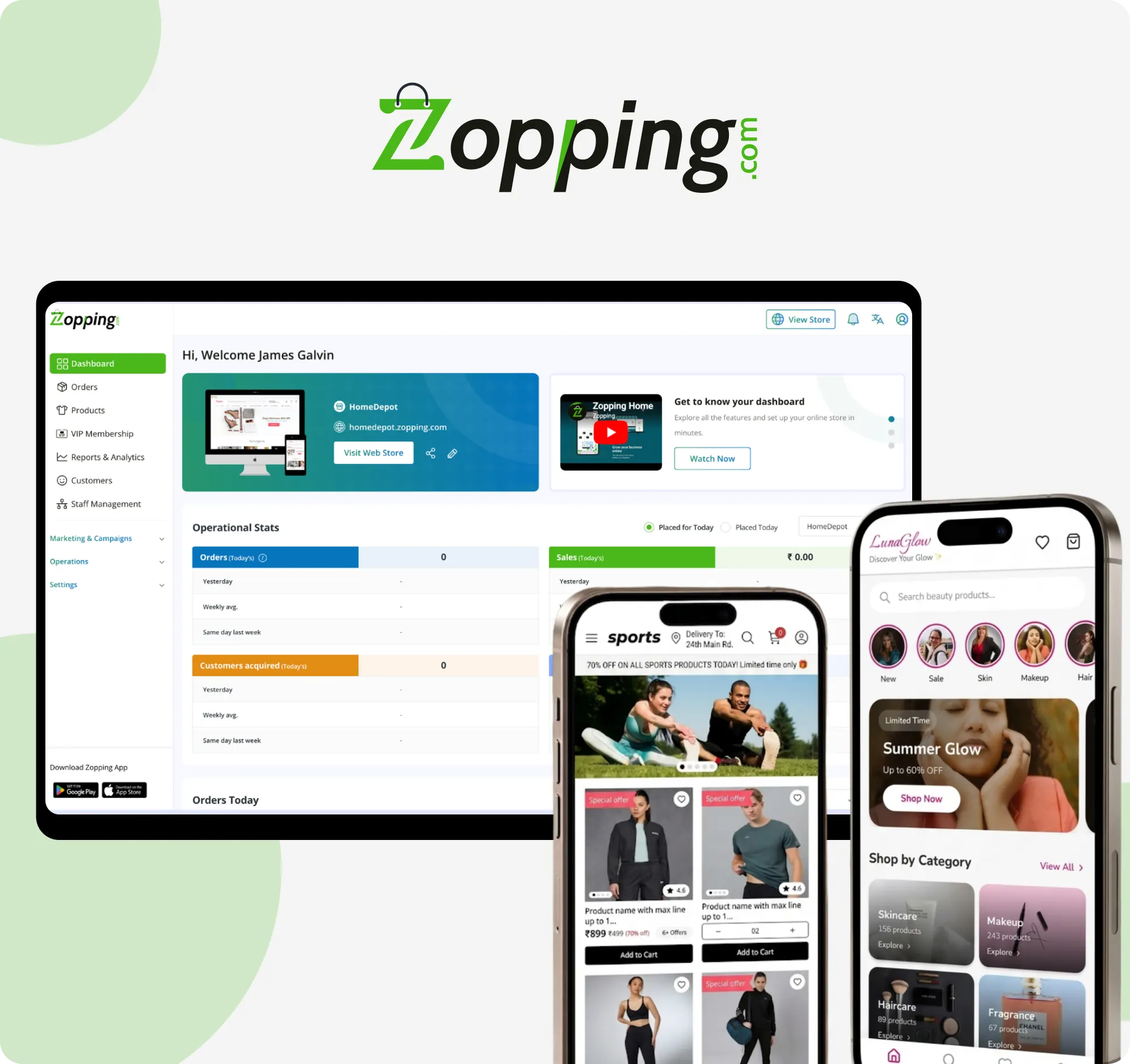
Zopping takes a different route. Instead of focusing only on operations, it brings everything into one place. Your store, your app, your inventory, your orders, even your delivery workflows. It feels less like an OMS and more like a full system to run your business.
You are not just managing orders here. You are actually building your own sales ecosystem.
Key Features
- All-in-one platform covering storefronts, apps, orders, inventory, and shipping
- Multi-store management with centralised control over pricing and stock
- Hyperlocal workflows with real-time inventory and local delivery integrations
- Built-in marketing tools like SEO settings, offers, loyalty programs, and gift cards
- Returns management, reports, and analytics for tracking performance
Best For
- Grocery stores, pharmacies, and food brands handling quick local deliveries
- D2C brands that want both website and operations in one system
- Small and mid-sized businesses that prefer a no-code setup
How it compares to Unicommerce
Unicommerce does a solid job on the backend side of things. Zopping simply goes wider.
With Zopping, you are not just organising orders coming from marketplaces. You are also creating your own channel where customers buy directly from you. That changes how you think about growth.
If your focus is only fulfilment, Unicommerce is enough. If you also care about owning the front-end experience and not relying completely on marketplaces, Zopping starts making more sense.
Find the ideal e-commerce platform for your business in India!
Try Zopping Now -
Vinculum
Vinculum is built for scale. It combines order management and warehouse management into one enterprise-grade platform. If your business operates across multiple warehouses or even countries, Vinculum is designed to handle that level of complexity.
It also supports a large number of marketplaces and logistics partners, which helps keep operations connected across regions.
Key Features
- Centralised order management across online and offline channels
- Advanced warehouse management for both B2B and D2C fulfilment
- High-volume processing with large-scale infrastructure
- Wide range of marketplace and 3PL integrations
Best For
- Enterprise brands with complex supply chains
- 3PL companies managing multiple clients
- Businesses expanding across regions or countries
How it compares to Unicommerce
Both operate in a similar space. Vinculum leans more towards global operations and large-scale infrastructure, while Unicommerce is more commonly used across Indian ecommerce businesses. If your operations are already complex, Vinculum can feel more suited.
-
EasyEcom
EasyEcom focuses on simplifying multi-channel selling. It gives you a single dashboard to manage inventory, orders, and reporting across platforms.
The platform is known for automation and detailed analytics, which helps teams manage growth without increasing workload.
Key Features
- Real-time inventory sync across channels
- Automated order processing and routing
- Purchase and vendor management tools
- Built-in analytics and reconciliation reports
Best For
- Sellers active on marketplaces like Amazon and Flipkart
- D2C brands managing multiple sales channels
- Teams that rely on reporting and cost tracking
How it compares to Unicommerce
Both help manage multi-channel operations. EasyEcom feels more user-friendly and focused on day-to-day usability, while Unicommerce is often used when operations become more warehouse-driven.
-
Zoho Inventory
Zoho Inventory is part of the larger Zoho ecosystem, which many Indian businesses already use. It combines inventory management with GST billing and accounting integrations.
It is especially useful for small and medium businesses that want everything connected without using multiple tools.
Key Features
- Multi-channel selling with automatic stock updates
- Multi-warehouse tracking and stock transfers
- GST-compliant invoicing with e-invoicing support
- Barcode scanning for faster warehouse operations
- Integration with Zoho Books for accounting
Best For
- SMEs already using Zoho products
- Businesses that prioritise compliance and invoicing
- Brands managing stock across smaller warehouses
How it compares to Unicommerce
Zoho Inventory is more general-purpose and easier to set up. Unicommerce is more specialised for high-volume ecommerce operations. If your needs are moderate, Zoho Inventory can be enough.
-
PointNXT
PointNXT is a newer platform that focuses on giving small and growing sellers a simple way to manage ecommerce operations. It combines inventory, orders, and reporting with newer features like ONDC integration and WhatsApp-based shopping.
Its pricing model also makes it easier for smaller businesses to get started.
Key Features
- Multi-channel inventory and order management
- Shipping and returns integrations
- ONDC support for Indian sellers
- WhatsApp shopping bot for customer interactions
- Pay-per-order pricing with initial free orders
Best For
- New ecommerce sellers testing multiple channels
- Businesses exploring ONDC
- Teams that prefer simple pricing models
How it compares to Unicommerce
PointNXT is built for early-stage and growing businesses. Unicommerce is better suited for larger operations. If you are still scaling, PointNXT can feel more flexible.
Closing Thoughts
There is no single “best” alternative that fits every business. It really depends on how you operate.
If your focus is marketplaces and warehouse-heavy fulfilment, tools similar to Unicommerce will work fine. But if you want more control over your brand, your storefront, and your customer experience, moving to a more complete platform can make a noticeable difference.
Many Indian businesses today are shifting towards systems that combine operations and growth in one place. That is where platforms like Zopping stand out.
Ready to go digital? Start selling online with Zopping today!
Try NowFAQs
What does Unicommerce do?
Unicommerce is an ecommerce backend platform that helps businesses manage orders, inventory, and warehouse operations across multiple sales channels.
What is the cheapest alternative to Unicommerce in India?
Platforms like Zopping and PointNXT are generally more affordable, especially for small businesses or those just starting out.
Is Zopping a Unicommerce alternative?
Yes. Zopping can be considered an alternative, especially for businesses that want both storefront and order management in one platform instead of just backend operations.
What is the difference between an OMS and an ecommerce platform?
An OMS handles orders, inventory, and fulfilment. An ecommerce platform includes customer-facing elements like websites, apps, and checkout along with backend operations.
Which inventory management software is best for D2C brands in India?
It depends on your setup. For all-in-one control, Zopping works well. For marketplace-heavy operations, EasyEcom is often preferred. For simpler needs, Zoho Inventory is a solid option.